

Hairline Transplant Sydney: A Complete Guide to Natural Hairline Restoration
A hairline transplant can restore or reshape a receding, thinning, uneven or naturally high hairline using follicles taken from a suitable donor area.
At Bijan Clinic in Sydney, each treatment plan begins with an assessment of the patient’s current hairline, donor supply, facial proportions and likely future hair-loss pattern. Dr Bijan Shabani personally leads the clinical planning and hairline design, with hair transplant pricing starting from $7,000 AUD.
The purpose of a hairline transplant is not simply to place more hair at the front of the scalp. The position, shape, graft selection, density transition and direction of growth must all work together to create a result that looks appropriate for the individual patient.
This guide explains:
- What a hairline transplant can and cannot achieve
- Who may be suitable
- How a natural hairline is planned
- How FUE transplantation works
- How much treatment may cost in Sydney
- What recovery and growth involve
- How hairline transplantation differs from surgical hairline lowering
- When treatment may not be recommended
Book a free hairline assessment with Bijan Clinic →
Hairline transplant at a glance
| Treatment detail | What to expect |
|---|---|
| Procedure | FUE hair transplantation |
| Purpose | Restore recession, temple thinning, asymmetry or a naturally high hairline |
| Anaesthesia | Local anaesthesia |
| Procedure time | Commonly several hours, depending on graft numbers and complexity |
| Starting price | From $7,000 AUD |
| Initial growth | Often begins around months 3–4 |
| Result development | Coverage typically continues developing over 12–18 months |
| Clinic location | Auburn, Sydney |
| Consultation | Free personalised assessment |
Timelines, graft requirements and outcomes vary between patients.
What is a hairline transplant?
A hairline transplant is a surgical hair-restoration procedure in which individual follicular units are relocated from a suitable donor area—usually the back or sides of the scalp—to the frontal hairline.
The procedure may be used to:
- Restore a receding frontal hairline
- Add coverage to thinning temples
- Improve an uneven or asymmetrical hairline
- Lower the appearance of a naturally high hairline
- Rebuild selected areas affected by stable scarring
- Soften or revise an unnatural-looking previous transplant
A hairline transplant does not create new follicles. It redistributes a limited supply of existing donor hair. For this reason, the treatment plan must consider not only the patient’s appearance today, but also how their natural hair loss may progress in future.
FUE avoids a single linear donor scar, but it is not a scar-free procedure. Small individual extraction marks are created where follicular units are removed. Their visibility depends on factors including the punch size, extraction pattern, healing characteristics and the patient’s preferred hairstyle.
Not every receding hairline is caused by pattern hair loss. In some patients, scarring conditions such as Frontal Fibrosing Alopecia must be considered before transplantation
For a more detailed explanation of harvesting and implantation, read our guide to FUE hair transplant in Sydney.
what can a hairline transplant address?
Hairline transplantation is not limited to one type of patient or one pattern of hair loss.
Receding hairline
A receding hairline is commonly associated with androgenetic or pattern hair loss. Recession may begin at the temples, create an M-shaped pattern or gradually affect the frontal hairline.
A transplant may restore selected areas when the donor supply and long-term pattern of loss allow it.
Thinning temples
Some patients retain a central hairline but lose density around the temporal corners. Strategic graft placement may improve the facial frame without rebuilding the entire frontal region.
Naturally high hairline
A person may have a high forehead without experiencing active hair loss. In selected candidates, follicles can be placed below the existing line to create the appearance of a lower hairline.
This specific treatment is explained in our guide to hairline lowering with FUE.
Uneven or asymmetrical hairline
Natural hairlines are rarely perfectly symmetrical. However, a significant imbalance caused by genetics, hair loss, scarring or previous surgery may sometimes be improved with targeted graft placement.
Female hairline concerns
Women may seek treatment for a naturally high forehead, temple recession, traction-related loss or a localised stable scar. Female hairline planning usually requires softer transitions, finer graft selection and different proportions from a typical male design.
Read more about hairline transplant for women.
Stable postsurgical scars
Selected mature scars near the hairline may be camouflaged by placing follicles within and around the affected tissue. Growth in scar tissue can be less predictable, so assessment—and occasionally a limited test transplant—may be appropriate.
See our real hair transplant for an eyebrow lift scar case.
What can a hairline transplant not guarantee?
A responsible treatment plan should be clear about limitations.
A hairline transplant cannot:
- Stop all future loss of non-transplanted hair
- Create an unlimited donor supply
- Guarantee that every graft will survive
- Make FUE completely scar-free
- Always reproduce the density of an untouched natural hairline
- Safely place the hairline at any position requested
- Treat every type of scalp or hair-loss condition
- Guarantee an identical result between patients
Follicles taken from an appropriately selected donor area are generally more resistant to pattern hair loss and may continue growing long term. However, natural hair surrounding the transplant may continue to thin, which is why long-term planning matters.
Why natural hairline design matters
The appearance of a hair transplant depends on more than graft numbers.
A technically successful transplant can still look artificial when the hairline is:
- Positioned too low
- Too straight or perfectly symmetrical
- Too dense at the leading edge
- Designed without considering future recession
- Created with thick multi-hair grafts at the front
- Implanted at an unnatural angle
- Disconnected from the temple points or surrounding hair
Hairline design should be individualised rather than copied from a template.
How Dr Bijan plans a hairline
At Bijan Clinic, planning may consider the following factors.
Facial proportions
The proposed line should suit the forehead, temples, facial width and overall proportions. The lowest technically possible line is not always the most natural or sustainable choice.
Age and long-term appearance
A very low juvenile hairline may appear unsuitable as the patient ages and may consume donor follicles that could be needed later.
Current and potential future hair loss
The design must account for the possibility that native hair behind the transplanted area may continue thinning. A hairline that looks full immediately but becomes isolated later may require further treatment.
Donor supply
Donor hair is finite. Once follicles have been extracted, they do not regenerate in the donor area. This makes careful allocation important, particularly for younger patients or people with advanced loss.
Hair calibre and curl
Fine, coarse, straight, wavy and curly hair create different visual coverage. The number of grafts alone does not predict the final appearance.
Follicular-unit selection
Single-hair follicular units are generally preferred near the leading edge because thick multi-hair grafts at the front can create an abrupt or plug-like appearance.
Angle and direction
Frontal and temple hair normally exits the scalp at relatively low and changing angles. Recipient sites should follow the natural direction of the surrounding hair rather than forcing all grafts into a uniform pattern.
Density transition
A natural hairline is not a solid wall of equal density. It usually begins with a softer transition zone and becomes denser behind the leading edge.
Controlled irregularity
A perfectly straight line can look artificial. Small, deliberate variations may help reproduce the less uniform appearance of a natural hairline.
For a detailed explanation, read our complete guide to natural hairline design.
Hairline Transplant Cost in Sydney
A hairline transplant at Bijan Clinic starts from $7,000 AUD, all-inclusive — no hidden fees, no separate aftercare charges.
| Graft Range | Typical Use Case | Indicative Cost |
|---|---|---|
| 800–1,500 grafts | Hairline framing, temple recession | From $7,000 |
| 1,500–2,500 grafts | Moderate recession, fuller density | Mid-range |
| 2,500+ grafts | Advanced recession, combined with crown | Custom quote |
Payment plans available from $50/week through Zip Pay and TLC Medical Loans.
A real hairline-planning example
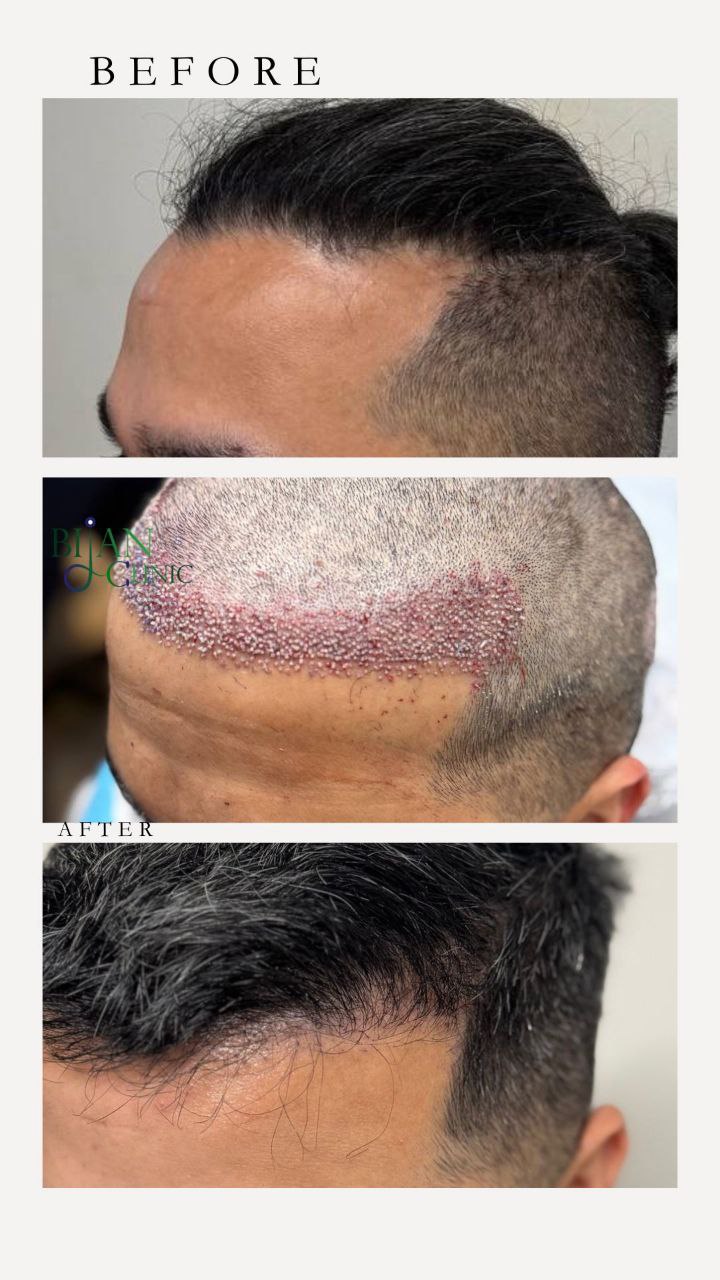
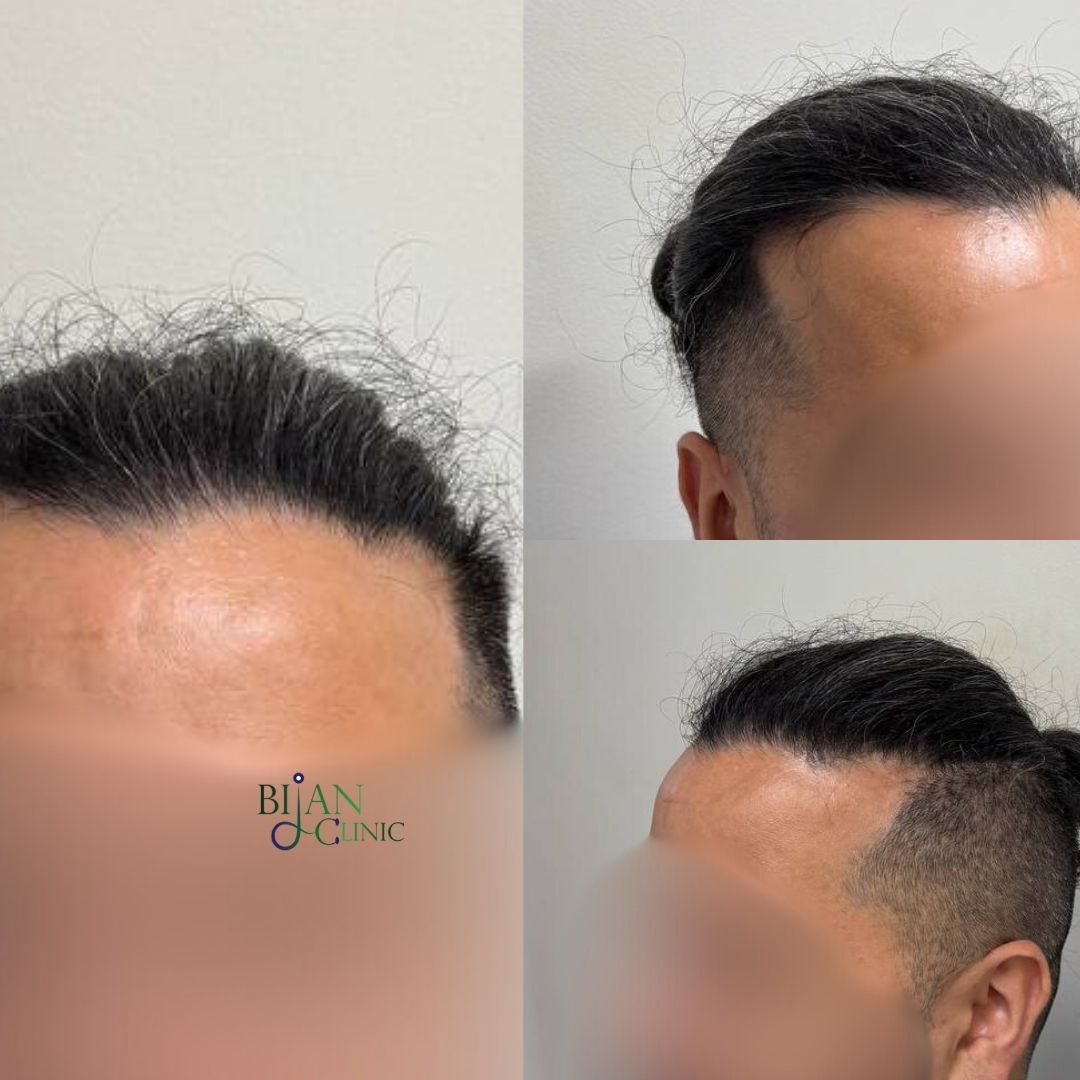
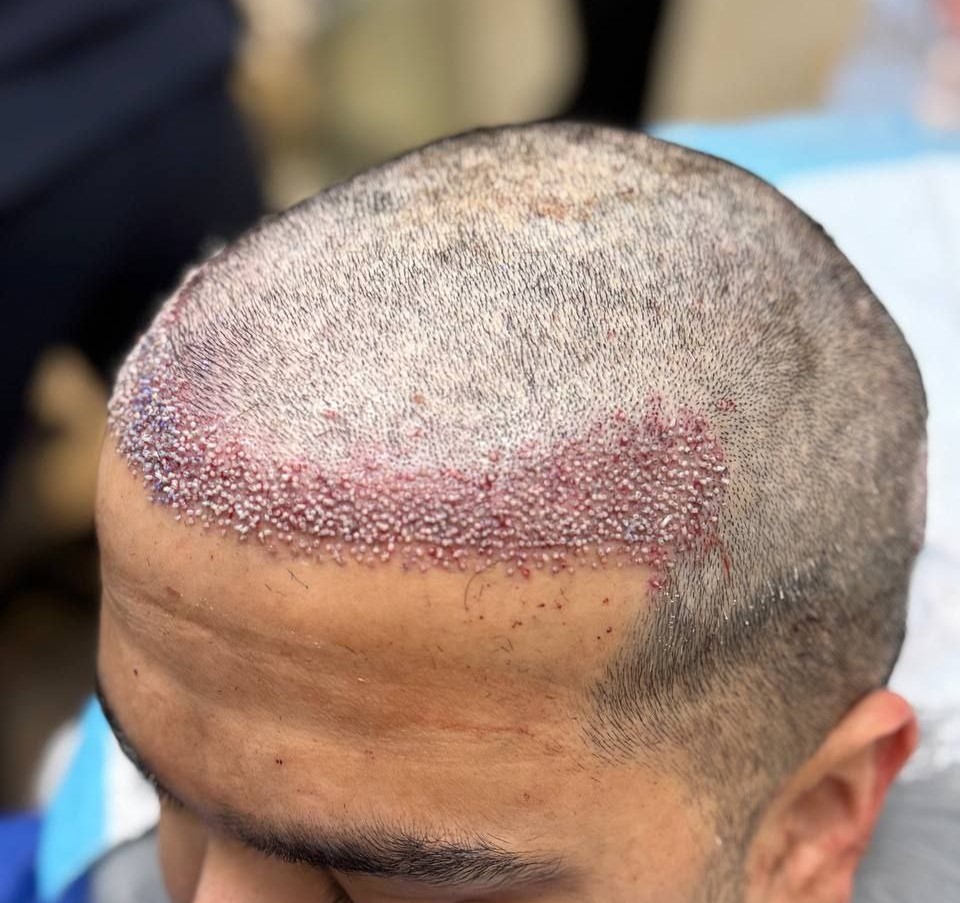
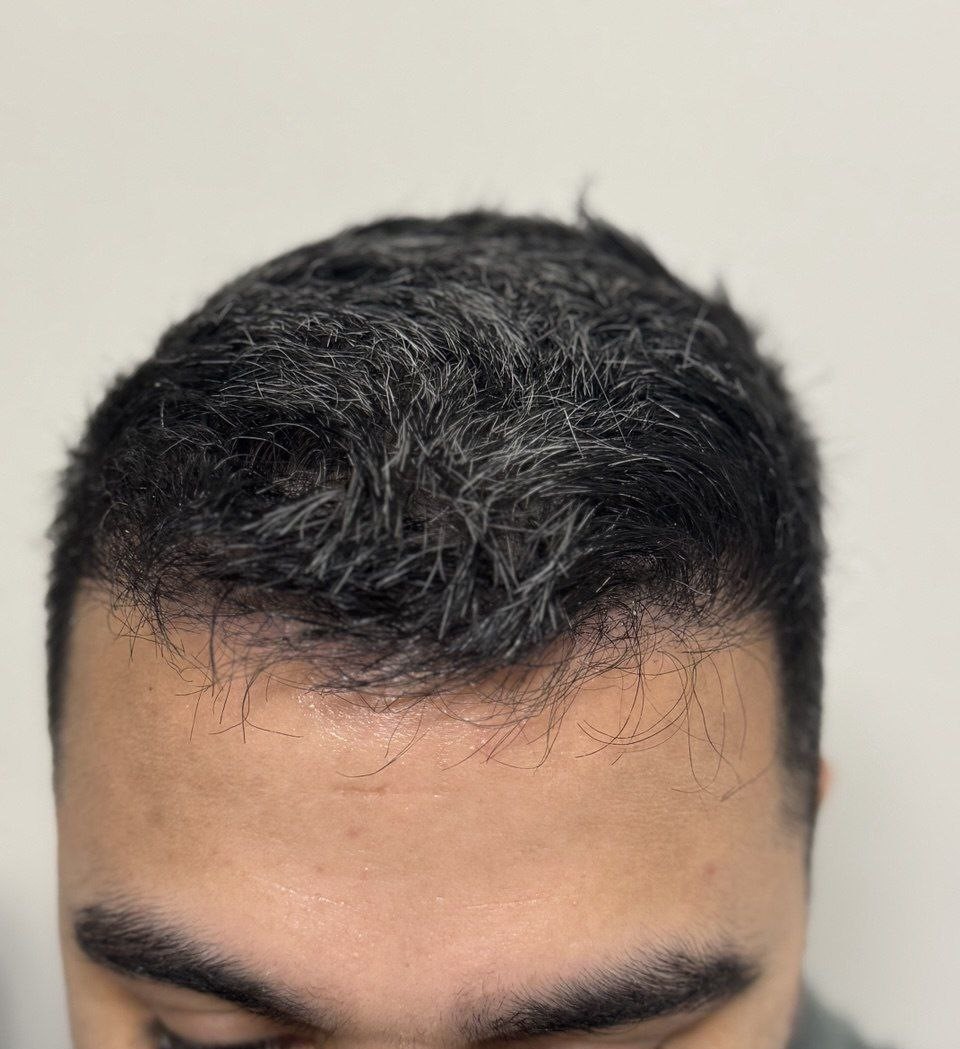
This Bijan Clinic case involved a patient undergoing frontal hairline restoration with 2,500 grafts using the FUE technique. The published photographs show the graft placement immediately after surgery and the developing result at approximately five months.
Patient concern
The patient had noticeable recession across the frontal hairline, with thinning extending into the temporal corners. This had weakened the framing of the face and made the front of the scalp appear less defined.
What Dr Bijan assessed
Before designing the new hairline, the treatment plan needed to account for:the extent and shape of the frontal recession;
- the areas requiring the greatest visual improvement, particularly the hairline and temples;
- the number of grafts available for rebuilding the front without spreading the grafts too thinly;
- the patient’s existing hair characteristics and natural growth direction; and
- the need to create a hairline that would blend with the surrounding native hair.
The published case page does not confirm the patient’s age, exact donor-density measurements or long-term hair-loss classification, so those details should not be stated as facts unless they are verified from the clinical record.
Why the hairline was designed this way
The objective was not simply to draw the lowest possible line. The transplanted area was shaped to rebuild the frontal frame while maintaining natural temporal contours and providing useful density across the front.
Rather than creating an unnaturally straight or aggressively low hairline, the design retained subtle recession at the corners and followed a mature, proportionate shape. This allowed the 2,500 grafts to be concentrated where they would provide the strongest visual improvement, while avoiding unnecessary use of the patient’s finite donor supply.
The immediate post-operative photograph also shows that the implanted zone extended beyond a narrow front edge and into the recessed frontal and temporal areas. This helped the new hairline blend gradually into the existing hair rather than appearing as a separate transplanted stri
Treatment details
Grafts: 2,500
Technique: FUE
Treatment area: Frontal hairline and recessed temple areas
Published result timing: Approximately five months after the procedure
Additional treatment: The case page states that Bijan Clinic combines its 2,500-graft procedures with PRP therapy, although this should only be attributed to this individual patient if confirmed in the clinical record.
How does a hairline transplant work?
1. Consultation and donor assessment
The process begins with an examination of the frontal hairline, scalp and potential donor area.
The assessment may consider:
- The type and pattern of hair loss
- Whether the loss appears stable or rapidly progressive
- Donor density and follicle quality
- Hair calibre, texture and curl
- Scalp health
- Previous procedures
- Medical history
- Treatment expectations
- Approximate graft requirements
Photographs may be taken to document the starting point and support treatment planning.
2. Personalised hairline design
Before graft placement, the proposed hairline is marked and reviewed with the patient.
This is an opportunity to discuss:
- The central position
- Temporal recession
- Shape and symmetry
- Facial balance
- Expected coverage
- Donor limitations
- The possibility of future hair loss
A patient should understand why a particular line is being recommended rather than being offered the lowest possible position automatically.
3. Local anaesthesia
Local anaesthesia is used in the donor and recipient areas.
Most patients experience limited discomfort during the main procedure after the area is numb, although temporary pressure, tenderness, sensitivity or tightness may still occur.
4. FUE graft extraction
Individual follicular units are removed from the donor area using small circular punches.
FUE avoids a single linear incision. It does, however, create individual extraction sites, and the donor pattern must be managed carefully to reduce the risk of visible thinning or overharvesting.
5. Graft preparation and selection
Extracted follicular units are assessed and organised.
Finer single-hair grafts may be reserved for the leading edge, while grafts containing more hairs may be positioned behind them to contribute to visual density.
6. Recipient-site planning and graft placement
Recipient sites are planned according to the desired:
- Angle
- Direction
- Distribution
- Density
- Transition from front to back
- Relationship with surrounding native hair
The naturalness of FUE depends heavily on design, recipient-site angles, graft distribution and correct placement—not only on the harvesting technique.
7. Same-day discharge and aftercare
Hairline transplantation is generally performed as a day procedure.
Patients receive individual instructions covering topics such as:
- Sleeping position
- Washing the scalp
- Protecting the grafts
- Medication use
- Physical activity
- Swelling
- Crusting
- Follow-up appointments
Bijan Clinic’s current pricing information states that hair-transplant packages begin from $7,000 and include PRP therapy and follow-up support. Confirm that the same inclusions apply to this hairline-specific page before publication.
How many grafts are needed for a hairline transplant?
There is no universal graft number.
A relatively small area of temple recession may require fewer grafts than a wide frontal zone or a hairline-lowering treatment. Graft requirements may also increase when the existing hair is fine, straight or creates a strong colour contrast with the scalp.
An estimate may consider:
- Width of the frontal area
- Depth of temple recession
- Current density
- Desired coverage
- Hair calibre
- Follicular-unit composition
- Donor availability
- Long-term treatment strategy
As a general clinical concept, hairline procedures may range from smaller sessions to more than 2,000 grafts, but only a personalised assessment can provide a meaningful estimate.
Hairline transplant recovery timeline
Recovery varies, but the following timeline provides a general guide.
Days 1–3
Redness, swelling, tightness and visible recipient sites may occur. The grafts require careful protection during this early stage.
Days 4–7
Swelling usually begins to settle. Some patients feel comfortable returning to desk-based work, although the recipient area may remain visible.
Days 7–14
Small crusts generally loosen and reduce as healing progresses. Washing instructions should be followed carefully.
Weeks 2–8
The transplanted hair shafts may shed. This commonly expected stage does not necessarily mean that the underlying follicles have been lost.
Months 3–4
Early new growth may begin, although it can initially appear fine, uneven or sparse.
Months 5–8
Coverage usually becomes more noticeable as additional hairs emerge and begin thickening.
Months 9–12
Density, texture and styling potential may continue improving.
Months 12–18
The result may continue maturing, particularly in areas where growth develops more slowly.
This timeline is a guide rather than a promise. Individual growth varies according to healing, hair cycles, graft characteristics and other clinical factors.
Read the complete hair transplant recovery timeline.
When can I return to work?
Many patients return to desk-based work after approximately one week, but this depends on:
- The size of the procedure
- Swelling and redness
- Whether the donor area was shaved
- The visibility of crusting
- The physical demands of the job
- Personal comfort with the temporary appearance
Patients whose work involves heavy exertion, dust, direct sun exposure or a risk of contact with the scalp may require more time or modified duties.
Hairline transplant versus surgical hairline lowering
Hairline transplantation and surgical hairline lowering can both reduce the appearance of a high forehead, but they use different methods.
| Hairline transplant | Surgical hairline lowering |
|---|---|
| Follicles are transplanted below or within the existing hairline | The hair-bearing scalp is surgically advanced |
| Result develops gradually as transplanted hair grows | Hairline position changes immediately |
| Requires adequate donor follicles | Requires appropriate scalp laxity and surgical suitability |
| Creates small FUE extraction sites in the donor area | Creates an incision along the frontal hairline |
| May address recession, temple thinning, asymmetry or selected scars | Primarily intended to shorten the forehead in selected patients |
| Density depends on graft growth and donor supply | Existing hair-bearing scalp is repositioned |
| A second session may sometimes be considered | Revision needs depend on healing and scar outcome |
Neither option is automatically better for every patient.
A hairline transplant may be considered when the patient:
- Has suitable donor hair
- Wants gradual follicular restoration
- Has temple recession or localised thinning
- Requires more control over shape and graft distribution
- Is not suitable for, or does not prefer, surgical scalp advancement
Surgical hairline lowering may be considered by an appropriately qualified surgeon when the patient has a naturally high forehead and sufficient scalp mobility.
Patients should receive an individual assessment and a balanced explanation of the available options.
Male and female hairline design
Male and female hairlines should not automatically be designed in the same way.
Male hairline considerations
A male hairline plan may account for:
- Current Norwood-pattern recession
- Potential future loss
- Temporal corners
- Age-appropriate positioning
- Donor conservation
- The risk of creating an isolated frontal island
Placing a male hairline too low can use a large number of grafts and may become difficult to maintain visually if native hair continues receding.
Female hairline considerations
A female hairline may require:
- A softer and often more rounded shape
- Finer grafts at the front
- Careful temple and side-fringe integration
- Evaluation of diffuse thinning
- Assessment for traction alopecia
- Consideration of a naturally high forehead
- Different facial-proportion goals
Diffuse female hair loss may affect both the recipient and donor areas, so not every woman with thinning is suitable for surgery.
For detailed guidance, visit our hairline transplant for women page.
Who may be suitable for a hairline transplant?
A patient may be considered suitable when they have:
- A receding, thinning, uneven or naturally high hairline
- Adequate donor density
- A reasonably stable or predictable pattern of hair loss
- A healthy scalp
- Realistic expectations
- An understanding of recovery and gradual growth
- Sufficient donor supply for the proposed design
- No medical contraindication identified during assessment
Suitability cannot be confirmed from age, photographs or graft calculators alone.
When might Dr Bijan advise against surgery?
A consultation should not automatically end with a recommendation for transplantation.
Treatment may be delayed, modified or declined when:
- Hair loss is progressing rapidly
- Donor density is insufficient
- Diffuse thinning affects the donor area
- The requested hairline is too low for the available graft supply
- The patient may need donor follicles preserved for future loss
- An active scalp condition is present
- The cause of shedding has not been investigated
- Expectations cannot be met realistically
- A non-surgical approach should be considered first
- Medical history increases the treatment risk
- The patient is not prepared for recovery or long-term follow-up
Sometimes the most appropriate recommendation is to wait, investigate the cause of loss or choose a more conservative design.
This section is especially important because it shows that treatment planning is based on long-term suitability rather than simply filling the lowest possible line.
Will the result look natural?
A hairline transplant can look natural when the design and graft placement reproduce the visual characteristics of natural growth.
Important factors include:
- Age-appropriate position
- Facial balance
- Fine single-hair grafts at the front
- A gradual density transition
- Controlled irregularity
- Low and changing implantation angles
- Natural temple integration
- Respect for future hair loss
- Suitable donor-hair selection
No clinic should promise that every result will be completely undetectable. The outcome depends on the starting condition, donor supply, hair characteristics, healing and long-term loss.
Real Bijan Clinic hairline transplant results
The results section should include genuine cases with sufficient context rather than a gallery of unlabeled images.
For each patient, include:
- Primary concern
- Procedure date
- Confirmed graft count
- Donor and recipient areas
- Image timing
- Whether the result is still developing
- Any confirmed additional treatment
- Similar lighting and styling where possible
Recommended labels:
- Before treatment
- Hairline design
- Immediate post-operative placement
- Six-month developing result
- Twelve-month result
- Final mature result, when applicable
View real hairline transplant results →
Who performs the procedure at Bijan Clinic?
This section must match the clinic’s real workflow exactly.
Recommended transparent format
| Treatment stage | Responsible clinician or team |
|---|---|
| Consultation and scalp assessment | Dr Bijan Shabani |
| Donor assessment | Dr Bijan Shabani |
| Hairline design | Dr Bijan Shabani |
| FUE extraction | Bijan Clinic Team |
| Recipient-site creation | Bijan Clinic Team |
| Graft implantation | Bijan Clinic Team |
| Follow-up assessment | Dr Bijan Shabani |
Learn more about Dr Bijan Shabani and Bijan Clinic.
Frequently asked questions
Is a hairline transplant painful?
Hairline transplantation is performed under local anaesthesia. Most patients experience limited discomfort during the main procedure, although the anaesthetic injections can cause brief discomfort. Temporary tenderness, tightness or sensitivity may occur afterwards.
How long does a hairline transplant take?
A hairline transplant commonly takes several hours and is usually completed in one day. The duration depends on graft numbers, extraction requirements, recipient-site planning and the complexity of the design.
Are hairline transplant results permanent?
Follicles harvested from a stable donor area are generally more resistant to pattern hair loss and may continue growing long term. However, surrounding non-transplanted hair may continue to thin, and no procedure can guarantee lifelong survival of every graft.
Does FUE leave a scar?
FUE avoids a single linear donor scar but creates small individual extraction marks. Their visibility depends on healing, punch size, extraction pattern, hair length and whether the donor area is overharvested.
Can a hairline be placed too low?
Yes. A line positioned too low may consume unnecessary donor grafts, appear less appropriate with age and become difficult to maintain if native hair behind it continues receding.
Can a hairline transplant lower a high forehead?
In selected patients, follicles can be placed below the existing hairline to reduce the visible height of the forehead. Suitability depends on facial proportions, donor supply, scalp condition and the amount of lowering requested.
How many grafts will I need?
The number depends on the width and depth of recession, temple involvement, hair calibre, donor density and desired coverage. An examination is required for an accurate estimate.
When will new hair begin growing?
Early growth may begin around three to four months, but it is often fine and uneven initially. Coverage and thickness usually continue developing over the following months.
When will I see the final result?
Many patients see substantial development by around 12 months, although maturation may continue toward 18 months. Individual timelines vary.
Can women have a hairline transplant?
Yes, selected women may be suitable for transplantation to address a high hairline, temple recession, traction-related loss or stable scarring. Diffuse thinning and donor quality must be assessed carefully.
Can hair loss continue after the procedure?
Yes. Transplantation does not automatically stop loss of the patient’s existing non-transplanted hair. Long-term planning and, where appropriate, discussion of other management options remain important.
Can a previous unnatural hairline be corrected?
Some previous transplant results may be improved through strategic graft placement, removal or redistribution. Corrective work can be complex and depends on the existing grafts, scarring and remaining donor supply. Poorly planned revision surgery may create further scarring or reduce future options.