
Facial Hair Restoration in Sydney
Beard Transplant Sydney
Personalised FUE beard transplantation for patchy, sparse or uneven facial hair at Bijan Clinic in Auburn, Sydney.
- Doctor-led assessment
- Individually designed beard shape
- FUE follicular-unit placement
- Free consultation available
What Can a Beard Transplant Address?
Beard transplantation may be considered by people who have naturally limited facial-hair growth or areas that remain noticeably less dense than the surrounding beard. The treatment plan depends on the existing growth pattern, the condition of the facial skin and the amount of suitable donor hair available.
Patchy beard growth
Selected gaps may be filled to create more consistent facial-hair coverage.
Sparse cheeks
Grafts may be placed through naturally thin cheek areas where additional coverage is suitable.
Thin or uneven moustache
A treatment plan may address asymmetry or limited density through parts of the moustache.
Limited sideburn growth
Sideburns may be refined or connected more naturally with the existing facial hair.
Facial-hair gaps
Small areas between the moustache, goatee, jawline or cheeks may be assessed for restoration.
Selected facial scars
Transplantation into scar tissue may be possible in selected cases, following an assessment of the skin and blood supply.
Beard-shape refinement
The cheek line, jawline, goatee or moustache may be redesigned to complement the existing beard.
Gender-affirming facial hair
Beard restoration may be considered for suitable transgender patients as part of an individualised facial-hair plan.
What Is a Beard Transplant?
A beard transplant is a facial-hair restoration procedure in which follicular units are taken from a suitable donor area, commonly at the back or sides of the scalp, and placed into selected parts of the beard, moustache, goatee or sideburns.
At Bijan Clinic, the design is planned around the patient’s facial proportions, existing beard pattern, donor characteristics and desired level of coverage. The number of grafts and the areas treated vary from one patient to another.
How Does an FUE Beard Transplant Work?
FUE allows follicular units to be extracted individually from the donor area. The procedure is planned according to the required beard shape, the available donor supply and the characteristics of the recipient skin.
Consultation and assessment
The existing facial-hair pattern, donor area, skin condition, medical history and treatment goals are reviewed.
Beard design
The proposed cheek line, jawline, moustache or goatee is mapped in relation to the patient’s face and natural growth.
Donor hair extraction
Suitable follicular units are extracted individually from the selected donor area using the FUE approach.
Recipient-site creation
Small recipient sites are created with close attention to the intended angle, direction and distribution of the new hairs.
Graft placement
The prepared grafts are placed into the planned areas, with density adjusted to suit the design and available donor supply.
Recovery and growth
Temporary redness, swelling, crusting or shedding may occur. Visible growth develops gradually, and timelines vary between patients.
Why Beard Design and Hair Direction Matter
Beard hair does not grow in one uniform direction. The pattern changes across the sideburns, cheeks, moustache, chin and jawline. Recipient sites therefore need to follow the natural flow of the surrounding facial hair rather than being placed at a single angle.
A personalised design also considers how the new beard will look both closely trimmed and at a longer length. The aim is to integrate transplanted follicles with the patient’s existing facial hair, rather than creating a separate or overly rigid outline.
- Natural hair angle
- Direction of growth
- Facial symmetry
- Face shape
- Existing beard density
- Personal treatment goals
Where Does Donor Hair Come From?
Donor follicles for a beard transplant are commonly selected from the back or sides of the scalp. The choice depends on hair calibre, texture, colour, curl, donor density and how closely the available hair may blend with the patient’s existing facial hair.
Donor supply must be assessed carefully because the follicles removed for facial-hair restoration are no longer available for a future scalp procedure. The proposed graft number should therefore be considered as part of a longer-term donor-management plan.
Who May Be a Suitable Candidate?
Suitability cannot be confirmed from photographs alone. An assessment is needed to review the donor area, recipient skin, facial-hair pattern, medical history and expectations before a treatment plan is recommended.
A suitable candidate may have:
- Adequate and stable donor hair for the proposed level of coverage
- Healthy recipient skin without an untreated active condition
- Patchy, sparse or limited facial-hair growth
- Realistic expectations about density and growth timelines
- A medical history considered suitable following assessment
- A clear understanding of aftercare and follow-up requirements
Who may need further assessment or postponement?
Surgery may be delayed, modified or declined when proceeding could create an unsuitable or unpredictable outcome.
- An active infection, inflammation or untreated skin condition in the recipient area
- Insufficient donor density for the requested beard design
- A facial scar that requires additional assessment before grafting
- A medical condition or medication that may affect treatment or healing
- Expectations that cannot reasonably be achieved with the available donor supply
- Uncertainty about future facial-hair development or the preferred long-term beard shape
Beard Transplant Before and After
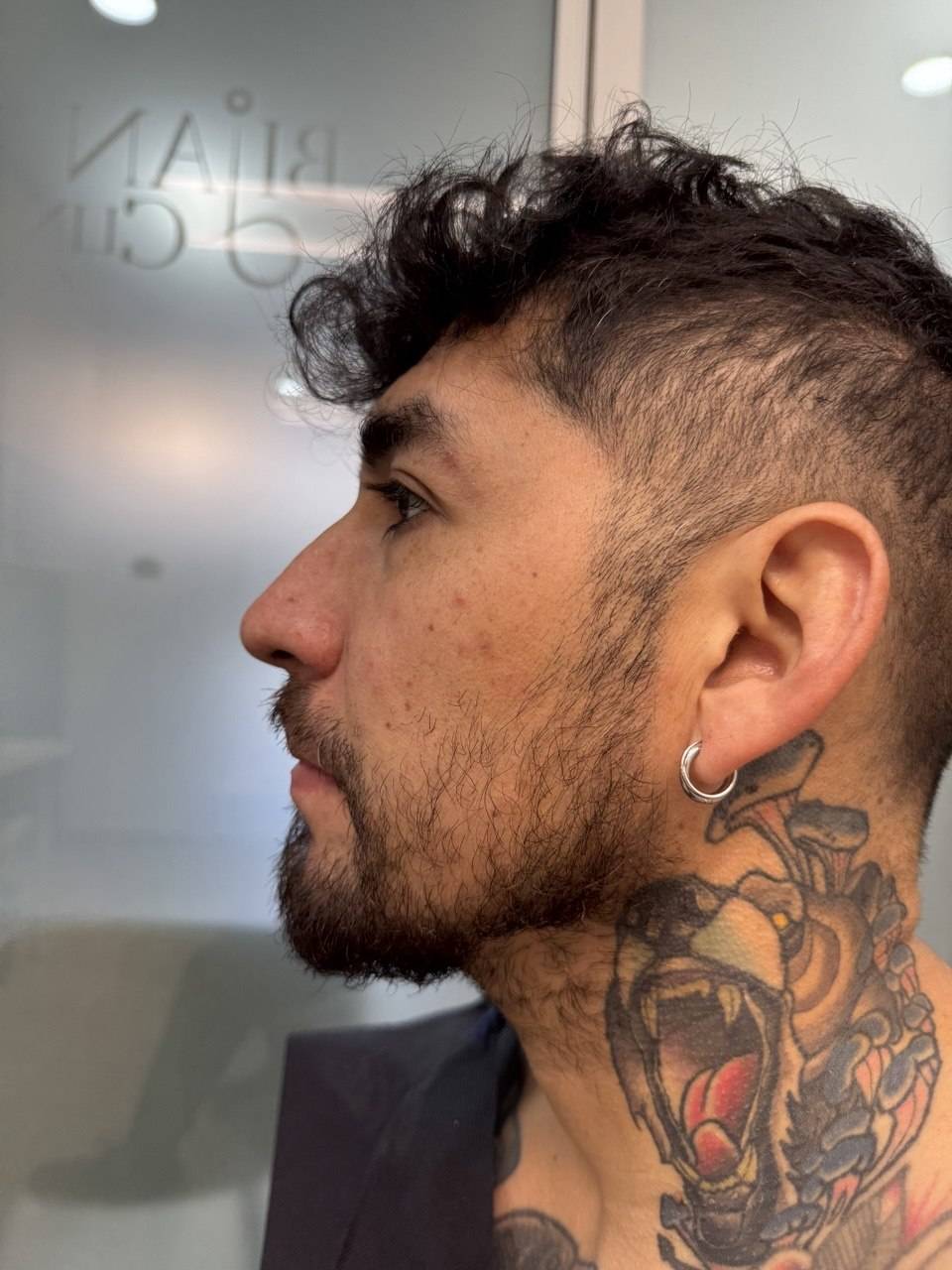
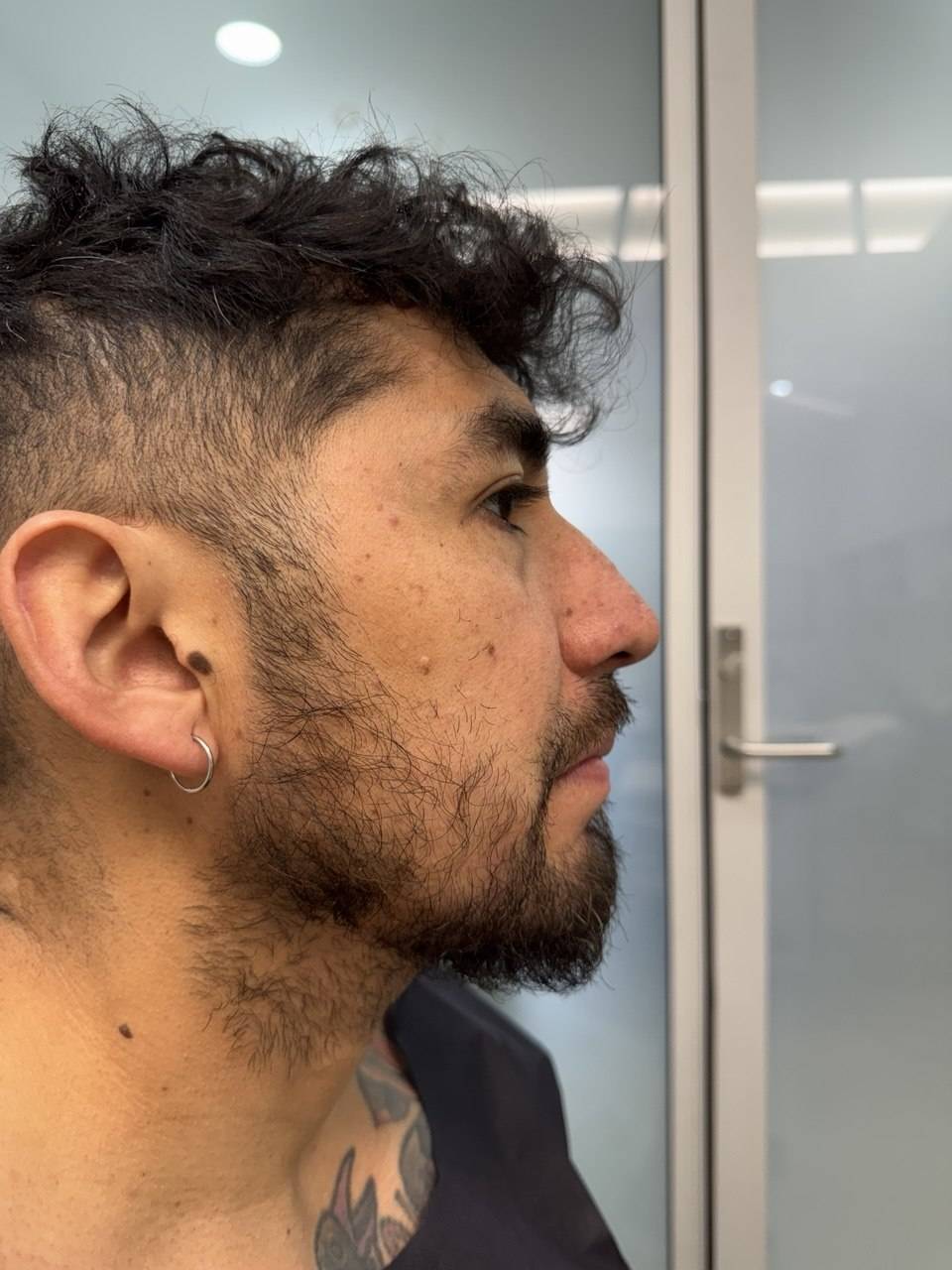
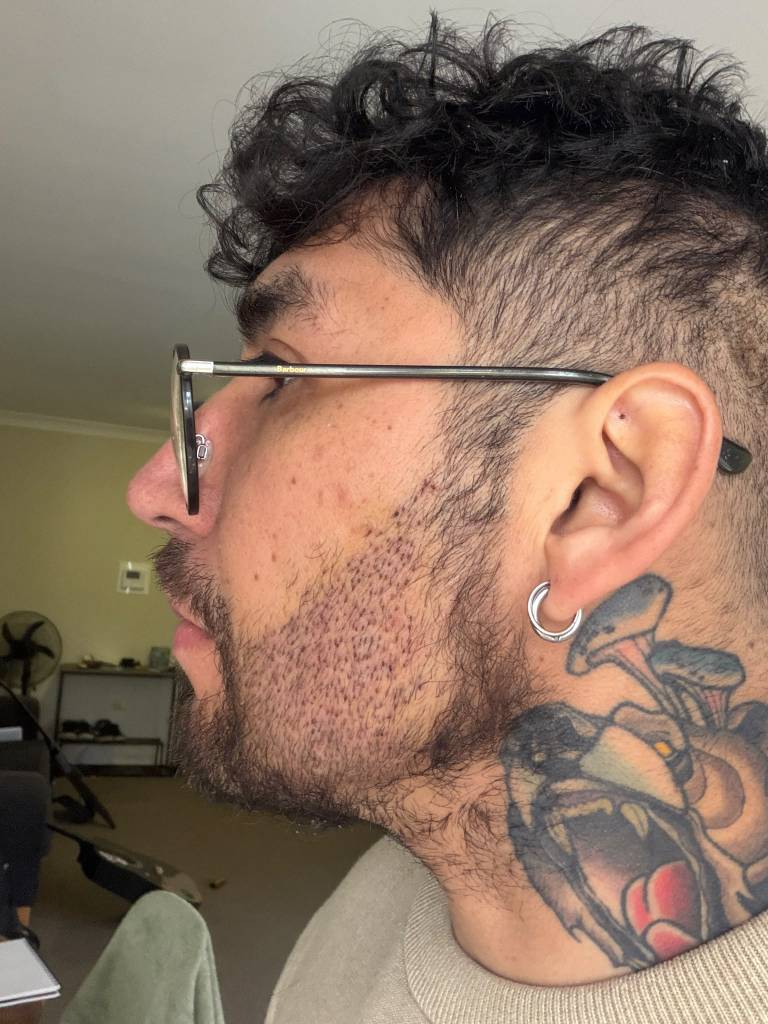
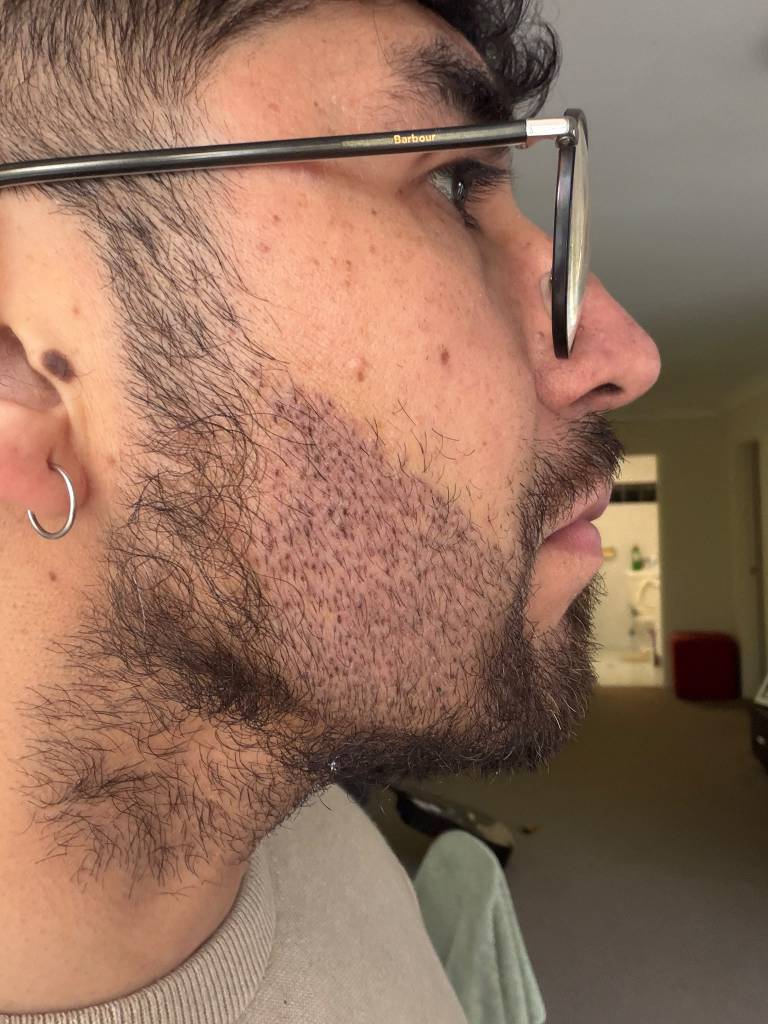
The photographs below show real beard transplant cases treated at Bijan Clinic.
Image timing varies between cases, and immediate or early postoperative
photographs should not be interpreted as final results. Individual growth,
density and healing vary between patients.


Beard Transplant Recovery
Recovery after a beard transplant develops in stages. Temporary redness, swelling, crusting or sensitivity may occur during the early period, while visible growth takes place gradually. The exact timing and appearance of each stage vary between patients.
First few days
Small crusts, redness, swelling or tenderness may be visible around the donor and recipient areas. Patients receive individual aftercare instructions for washing, sleeping and protecting the newly placed grafts.
Initial shedding
Some of the transplanted hair shafts may shed after the procedure. This does not necessarily mean that the follicles have been lost, as the grafts may later enter a new growth phase.
Early growth
New facial-hair growth may begin gradually after an initial resting period. Early hairs can appear fine or uneven before becoming more established.
Continued maturation
Density, texture and coverage may continue to develop over time. Growth rates differ, and the final appearance should not be judged from the early postoperative stage.
Beard Transplant Cost in Sydney
The cost of a beard transplant in Sydney depends on the size and location of the treatment area, the number of grafts required, donor availability and the complexity of the proposed beard design. A smaller procedure for selected gaps or a moustache area may require fewer grafts than restoration across the cheeks, jawline and goatee. Because facial-hair patterns and donor characteristics vary, an exact quote can only be provided after a personalised assessment. Payment plans are available, and the clinic team can explain the available options during the free consultation.
Why Choose Bijan Clinic?
Every beard transplant plan is based on the patient’s facial proportions, existing growth, donor characteristics and treatment goals. Assessments and procedures are provided at Bijan Clinic in Auburn, Sydney.
Auburn, Sydney location
Consultations and beard transplant procedures are provided at the clinic’s Auburn location in Sydney.
Doctor-led assessment
The donor area, recipient skin, facial-hair pattern and medical history are reviewed before suitability is confirmed.
Personalised beard design
The beard shape, outline, density, angle and direction of placement are planned according to the individual patient.
Real patient cases
Before-and-after photographs help patients review real clinical work while understanding that individual outcomes vary.
Free consultation
Patients can discuss their concerns, preferred beard style and possible treatment options before making a decision.
Payment plans available
Available payment options can be discussed with the clinic team during the consultation process.
Frequently Asked Questions
The answers below provide general information. Suitability, graft numbers, recovery and expected coverage must still be assessed individually.
Is a beard transplant permanent?
Transplanted follicles are selected from a suitable donor area and may provide long-term facial-hair growth. However, no procedure can guarantee that every graft will survive or remain unchanged. Results vary according to donor quality, skin condition, healing and individual factors.
Where is the donor hair taken from?
Donor follicles are commonly taken from the back or sides of the scalp. Hair calibre, texture, colour, curl and donor density are assessed to determine which follicles may blend most naturally with the existing facial hair.
Can beard transplantation fill patchy areas?
It may be used to add coverage to selected gaps in the cheeks, jawline, goatee, moustache or sideburns. The achievable density depends on the size of the area, existing facial hair and the available donor supply.
Can it be used for facial scars?
Transplantation into facial scar tissue may be considered in selected cases. The age and condition of the scar, skin quality and blood supply need careful assessment because growth in scar tissue can be less predictable than growth in unaffected skin.
How many grafts may be needed?
Graft requirements vary considerably. A small isolated gap may need far fewer grafts than restoration involving both cheeks, moustache, chin and jawline. An estimate can be provided only after the treatment area and donor supply have been assessed.
When does transplanted beard hair begin to grow?
Transplanted hair may shed before entering a resting phase. Visible new growth can then begin gradually over the following months. The pace of growth and maturation differs between patients, so early photographs should not be treated as the final result.
Does transplanted beard hair need trimming?
Donor hair taken from the scalp can retain some scalp-hair characteristics and may grow at a different rate from native beard hair. Regular trimming and grooming may therefore be needed to maintain the preferred beard length and shape.
How much does a beard transplant cost in Sydney?
Cost depends on the area being restored, the number of grafts, donor availability and the complexity of the design. A personalised quote is provided after assessment. You can also review our beard and moustache transplant cost information .
Can transgender patients have a beard transplant?
Beard transplantation may be considered for suitable transgender patients seeking gender-affirming facial-hair restoration. Treatment planning should consider facial proportions, donor supply, existing hair growth, medical history and any related treatments.
Is a consultation required?
Yes. A consultation is needed to assess the donor area, recipient skin, facial-hair pattern and treatment goals. It also allows the proposed design, approximate graft requirements, recovery and pricing to be discussed before surgery is considered.
Medical note: This information is general and does not replace an individual medical assessment. Suitability, healing, graft survival, density and growth timelines vary between patients.
Personalised Beard Assessment
Thinking About a Beard Transplant in Sydney?
A consultation can help determine whether beard transplantation may be suitable for your facial-hair pattern, donor area and preferred beard design. The team at Bijan Clinic can discuss possible treatment areas, approximate graft requirements, recovery and pricing.
Suitability, graft requirements, recovery and results vary between patients. A personalised assessment is required before treatment is recommended.