

Female Hairline Transplant Before and After: Real Patient Results

These female hairline transplant before-and-after cases show real Bijan Clinic patients at different stages of treatment and growth.
Each case includes the patient’s original concern, the treatment plan, confirmed graft details where available and the timing of every image. Immediate post-operative photographs show the position of newly implanted grafts. They do not represent the final density or mature appearance of the transplanted hair.
Looking for information about the procedure, suitability, recovery and cost? Read our complete hairline transplant guide.
Individual results vary. Photographs show the outcome of the specific patient pictured and cannot predict an identical result for another person.
Female Hairline Lowering for a Naturally High Forehead
Patient concern
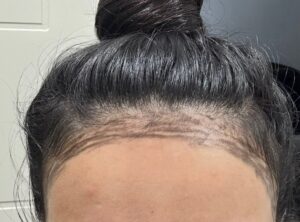
This patient was concerned about a naturally high frontal hairline that increased the visible height of the forehead and affected the way the face was framed.
Treatment plan
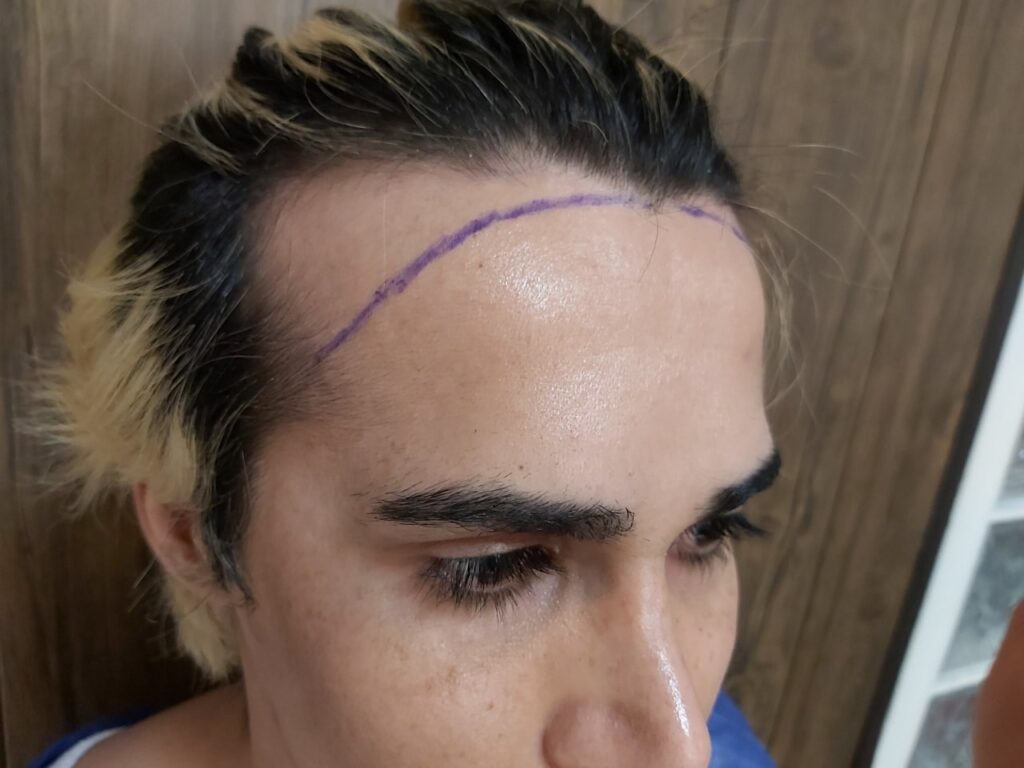
The treatment plan focused on creating a lower frontal frame while preserving a soft transition into the existing hairline.
The proposed position was assessed in relation to:
- Forehead width and visible height
- Facial proportions
- Existing temple shape
- Donor density
- Hair calibre and texture
- The amount of lowering requested
- Long-term donor requirements
The hairline was not simply placed at the lowest requested point. The selected position needed to provide meaningful improvement without creating an excessively large recipient area or using more donor follicles than could be supported responsibly.
Confirmed case details
Case detail Confirmed information Procedure FUE hair transplant Main concern Naturally high frontal hairline Treatment area [Frontal hairline / temples]
Before treatment
Before treatment: the patient’s naturally high frontal hairline and original forehead proportions.
Hairline design before FUE, showing the proposed lower frontal position and temple shape.
Developing result
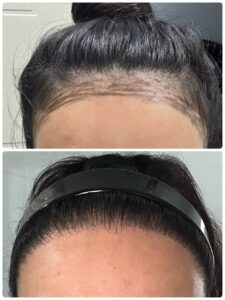
The visible change in this case included:
- Reduced appearance of forehead height
- A lower frontal frame
- Improved connection between the centre and temporal corners
- A softer transition into the existing hairline
This result was still developing at the time of the photograph and should not be presented as fully mature unless the follow-up timing confirms that description.
Female Temple Recession Restoration
Patient concern
This patient’s main concern was recession or reduced coverage around the temporal corners rather than a uniformly high frontal hairline.
Temple recession can change the shape of the frontal frame even when the central hairline remains relatively stable.
Treatment plan
The treatment plan focused on improving the temporal areas while maintaining a shape appropriate for the patient’s existing hairline.
Assessment included:
- Depth of temple recession
- Natural direction of temple hair
- Existing frontal density
- Donor availability
- Facial width and temple proportions
- Whether the central hairline also required treatment
- Stability of the surrounding hair
The aim was not to create completely filled or perfectly symmetrical temple corners. The design needed to blend with the native hair and avoid an abrupt or overly dense appearance.
Confirmed case details
| Case detail | Confirmed information |
|---|---|
| Procedure | FUE hair transplant |
| Main concern | Female temple recession |
| Treatment area | [Left temple / right temple / both temples / frontal line] |
Before treatment
Before treatment: reduced coverage around the temporal corners.
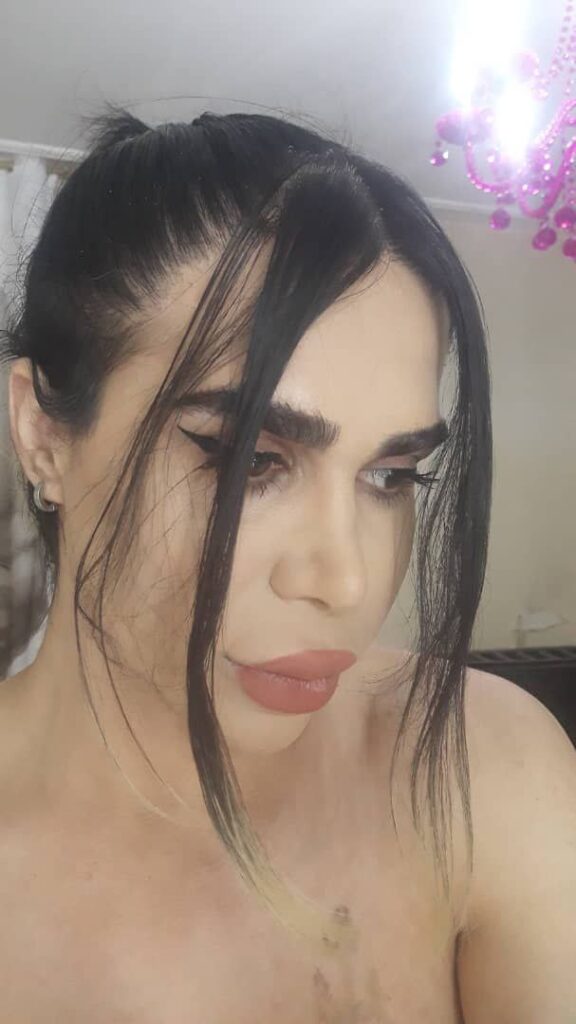
Follow-up result
Result note
Depending on the confirmed case, the visible improvement may include:
- Better temple coverage
- A more continuous frontal frame
- Softer transition into the side hair
- Improved styling flexibility
- Reduced appearance of temporal recession
Do not describe the result as complete if the images were taken before the expected maturation period.
Additional Female Hairline Transplant Cases
Additional cases should be presented visually and kept concise.
Each case card should include:
- Patient concern
- Confirmed treatment area
- Confirmed graft count
- Image timing
- Result stage
- One short result note
Treatment plan
The treatment plan focused on creating a lower frontal frame while preserving a soft transition into the existing hairline.
The proposed position was assessed in relation to:
- Forehead width and visible height
- Facial proportions
- Existing temple shape
- Donor density
- Hair calibre and texture
- The amount of lowering requested
- Long-term donor requirements
The hairline was not simply placed at the lowest requested point. The selected position needed to provide meaningful improvement without creating an excessively large recipient area or using more donor follicles than could be supported responsibly.
Confirmed case details
| Case detail | Confirmed information |
|---|---|
| Procedure | FUE hair transplant |
| Main concern | Naturally high frontal hairline |
| Treatment area | [Frontal hairline / temples] |
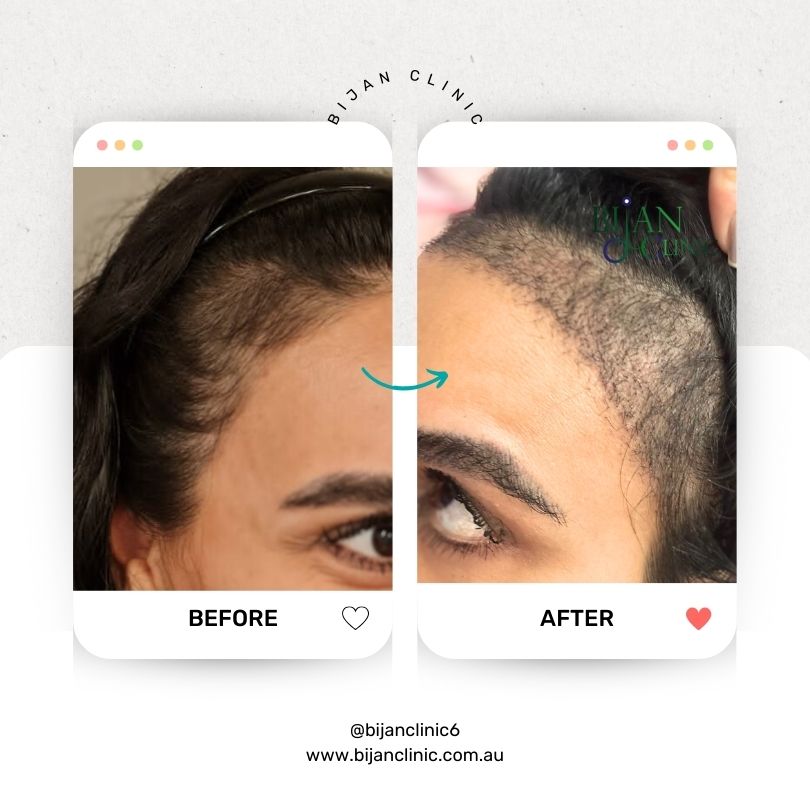
Result note
The visible change in this case included:
- Reduced appearance of forehead height
- A lower frontal frame
- Improved connection between the centre and temporal corners
- A softer transition into the existing hairline
Cover Scar For Hairline Transplant Cases
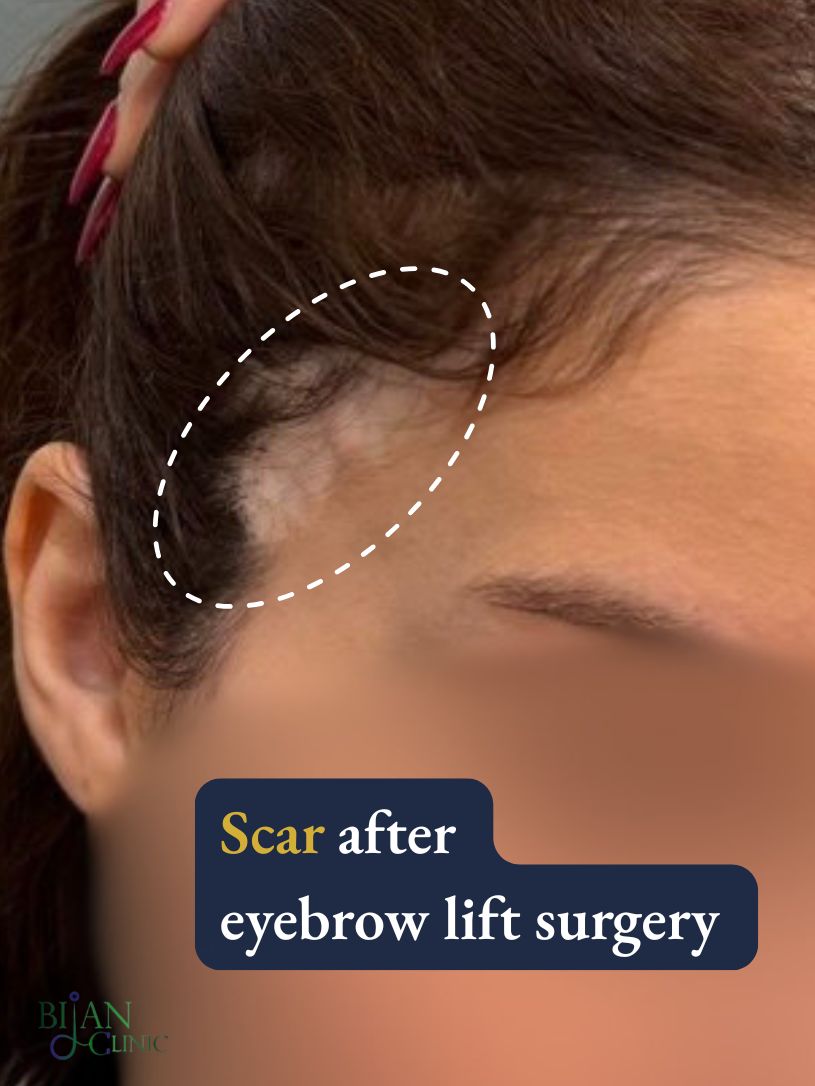
This patient had visible hairline scarring following a previous eyebrow lift procedure. Because graft growth in scar tissue can be less predictable, a small test transplant was performed first. After growth was observed at approximately six months, a full FUE procedure was planned for the affected area.
View the complete eyebrow lift scar hair transplant case →
Immediate Graft Placement Is Not the Final Result
An immediate post-operative photograph shows where the grafts were placed at the end of the procedure.
It can show:
- The outline of the new hairline
- The recipient area
- Graft distribution
- Temple involvement
- The transition into existing hair
It does not show:
- Mature hair thickness
- Final visual density
- Long-term hair texture
- Final styling potential
- The full effect of later hair growth
During the early recovery period, many of the visible transplanted hair shafts may shed. New growth then develops gradually.
For accurate labelling:
- Immediately after treatment means graft placement only.
- Three to four months usually shows early growth.
- Six months usually represents a developing result.
- Twelve months or later may provide a more meaningful view of the result.
- Final-result wording should only be used when the follow-up timing supports it.
For detailed information about shedding, regrowth and maturation, read our hair transplant recovery timeline.
Why Female Hairline Results Differ Between Patients
Two patients may receive similar graft numbers and still achieve different visual outcomes.
The appearance of the result may be influenced by:
- The original hairline position
- Size of the treatment area
- Donor density
- Hair calibre
- Straight, wavy or curly texture
- Hair colour and scalp contrast
- Existing native density
- Graft distribution
- Healing
- Future loss of non-transplanted hair
- Time since the procedure
Before-and-after photographs show what occurred in the individual case. They cannot guarantee the same density, shape or growth timeline for another patient.
Why Confirmed Graft Counts Matter
Graft count can provide useful context, but only when the number has been verified from the patient’s treatment record.
Do not estimate graft numbers from photographs.
The same graft count may produce different visual coverage depending on:
- Recipient-area size
- Hair thickness
- Number of hairs per follicular unit
- Existing native hair
- Temple involvement
- Distribution of grafts
- Hair texture
- Colour contrast
Graft numbers should support the case explanation, not act as a guarantee of quality or density.
For more information about how graft position, direction and density transition affect the result, read our guide to natural hairline design.
Frequently Asked Questions
Is an immediate post-operative photograph the final result?
No. It shows the location of the implanted grafts immediately after treatment. Hair growth, shedding, thickness and maturation occur over the following months.
When are female hairline transplant results usually assessed?
Early growth may begin after several months. Six-month images usually show a developing result, while twelve-month or later photographs may provide a more complete view. Individual timelines vary.
Why do results look different between patients?
Results vary because patients have different donor density, hair calibre, treatment areas, hair texture, existing density and healing responses.
Are the graft counts on this page confirmed?
Only graft counts verified from Bijan Clinic’s treatment records should be published. Where the number has not been confirmed, it should be omitted.
Can these before-and-after photos predict my result?
No. They provide examples of real individual outcomes but cannot predict an identical result. A personalised assessment is required to evaluate donor supply, treatment area and realistic expectations.
Learn More About Female Hairline Treatment
This page is intended to show real results rather than repeat the full procedure guide.
For more information about:
- Candidacy
- Procedure planning
- Cost
- Recovery
- Future hair loss
- FUE transplantation
Read our complete hairline transplant guide.
For female-specific suitability and treatment planning, visit our hairline transplant for women page.
Patients whose main concern is a naturally high forehead can read about hairline lowering with FUE.