

Frontal Fibrosing Alopecia Hair Transplant: A Real Staged FFA Case
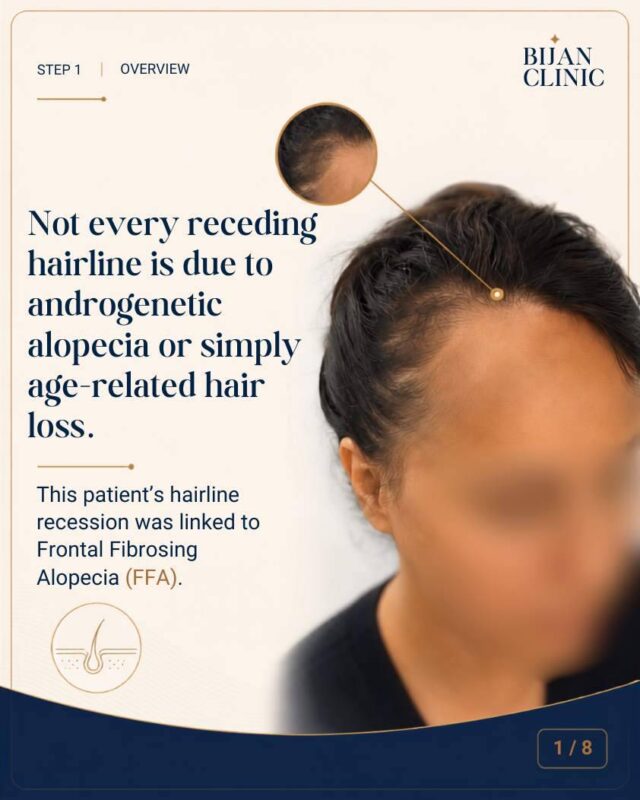
A receding hairline is not always the result of genetic hair loss.
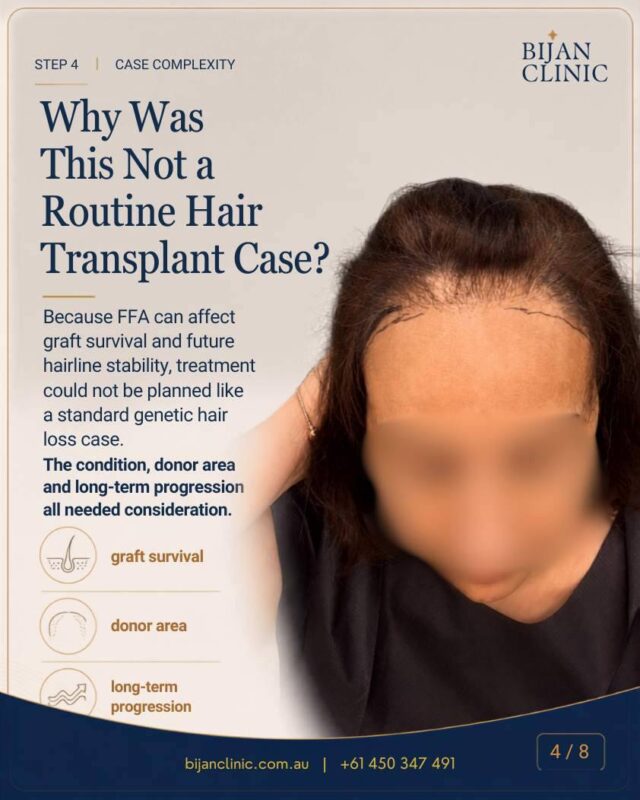
In some people, the change may be caused by Frontal Fibrosing Alopecia, also known as FFA. This inflammatory condition can damage follicles around the frontal hairline and leave permanent areas of scarring.
For that reason, hair transplantation in a patient with FFA cannot be planned in the same way as a routine hair transplant in Sydney.
Before surgery is considered, the diagnosis, recent progression, signs of inflammation, donor area and long-term expectations all need careful assessment.
Hair transplantation may be an option for some selected patients, but it is not appropriate for everyone with FFA.
What Is Frontal Fibrosing Alopecia?
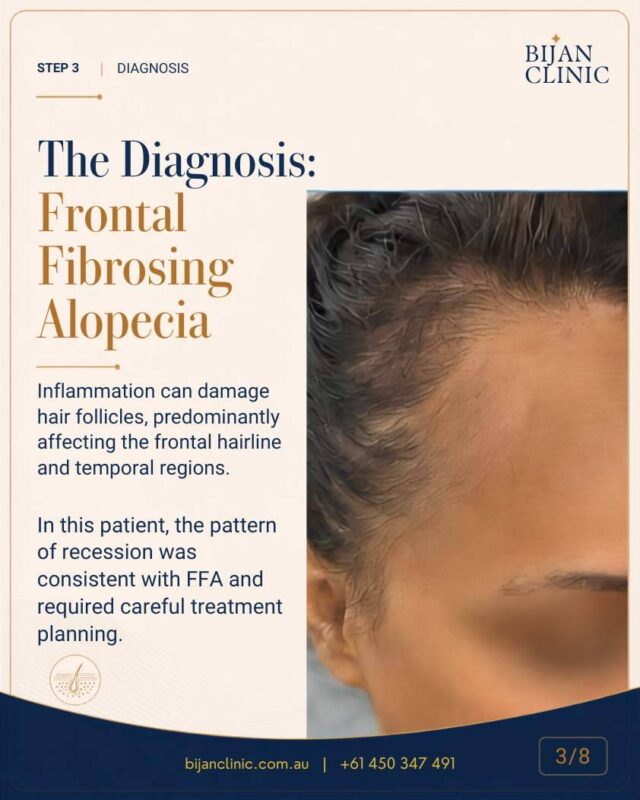
Frontal Fibrosing Alopecia is a type of scarring hair loss that most often affects the front and sides of the hairline.
It may also cause thinning or loss of the eyebrows. However, suitability for an eyebrow transplant would require a separate assessment of the cause, donor hair and recipient area.
In FFA, inflammation develops around the follicles. If that inflammatory process continues, the follicles may become permanently damaged. Scar tissue can then form in the affected area, reducing the possibility of natural regrowth.
Although FFA is most frequently reported in postmenopausal women, it may also affect younger women and men. The assessment process differs from routine hair restoration for women, because possible scarring and inflammation must also be considered.
What Can FFA Look Like?
Possible signs include:
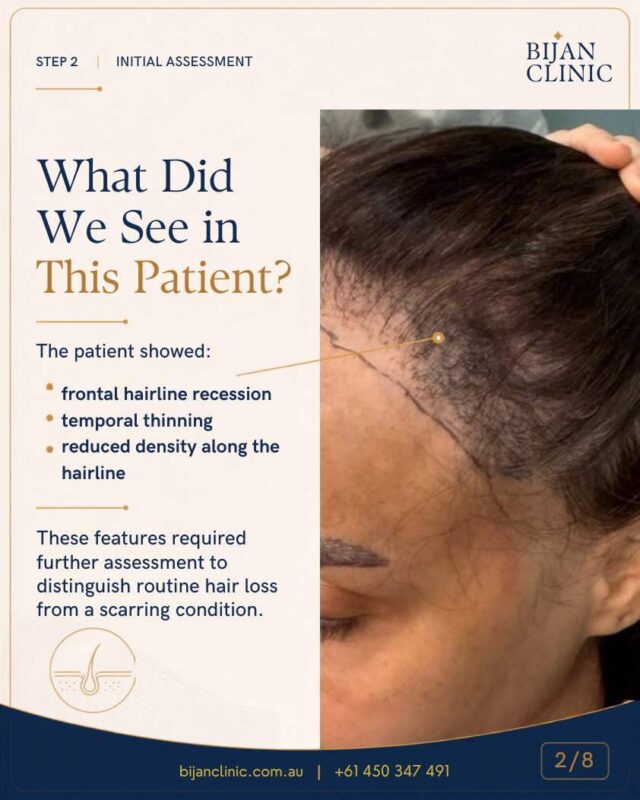
- gradual movement of the frontal hairline backwards
- recession around the temples
- thinning or loss of eyebrow hair
- redness or scaling around individual follicles
- itching, burning or tenderness
- smooth or pale-looking skin in areas where hair has been lost
Not every patient experiences discomfort or obvious redness.
Sometimes the first noticeable change is simply a slowly receding hairline.
Because this appearance can resemble genetic hair loss, traction alopecia or other forms of frontal recession, a visual assessment alone may not always be enough to establish the cause.
How Is FFA Assessed?
The assessment process may include:
- examination of the hairline pattern
- review of how quickly the recession has progressed
- checking the temples, eyebrows and surrounding scalp
- magnified scalp examination or trichoscopy
- discussion of symptoms and previous treatment
- scalp biopsy when the diagnosis remains uncertain
An important part of the assessment is determining whether the condition appears active or relatively stable.
This matters because ongoing inflammation may affect both the remaining native hair and the predictability of a future transplant.
Why Is FFA Different From Genetic Hair Loss?
In common pattern hair loss, follicles usually become progressively finer over time.
FFA behaves differently. It is an inflammatory scarring condition in which the follicle itself may be destroyed.
This creates several challenges:
- Hair loss may continue beyond the area being restored.
- Scarred recipient tissue may behave differently from healthy scalp.
- Transplanted follicles may have a less predictable long-term outcome.
- Surgery does not control the underlying inflammatory process.
Published research suggests that hair transplantation can be performed in selected FFA patients, but the evidence remains limited and results may be less predictable than for routine pattern hair loss.
Can Someone With FFA Have a Hair Transplant?
Possibly, but only after careful individual assessment.
Hair transplantation may be considered when:
- the diagnosis has been established
- the hairline has not shown clear recent progression
- there are no obvious signs of active inflammation
- the donor area is suitable
- the patient understands the limitations
- medical monitoring is already in place where required
- the potential benefits justify the uncertainty
Hair transplantation does not treat or cure FFA.
Its role is limited to restoring selected areas where hair has already been lost.
Long-term graft survival is an important consideration. Some studies have described encouraging early cosmetic density, followed by a reduction in transplanted density several years later.
Why Might Treatment Be Divided Into Stages?
A staged approach can allow the clinical team to review the response before committing to further restoration.
After the first procedure, the following may be assessed:
- visible growth in the transplanted area
- changes in the surrounding native hair
- scalp condition
- signs of renewed inflammation
- remaining donor supply
- whether additional coverage would be appropriate
A second procedure is not automatically required.
It should only be considered after reassessment of the patient’s current condition and treatment goals.
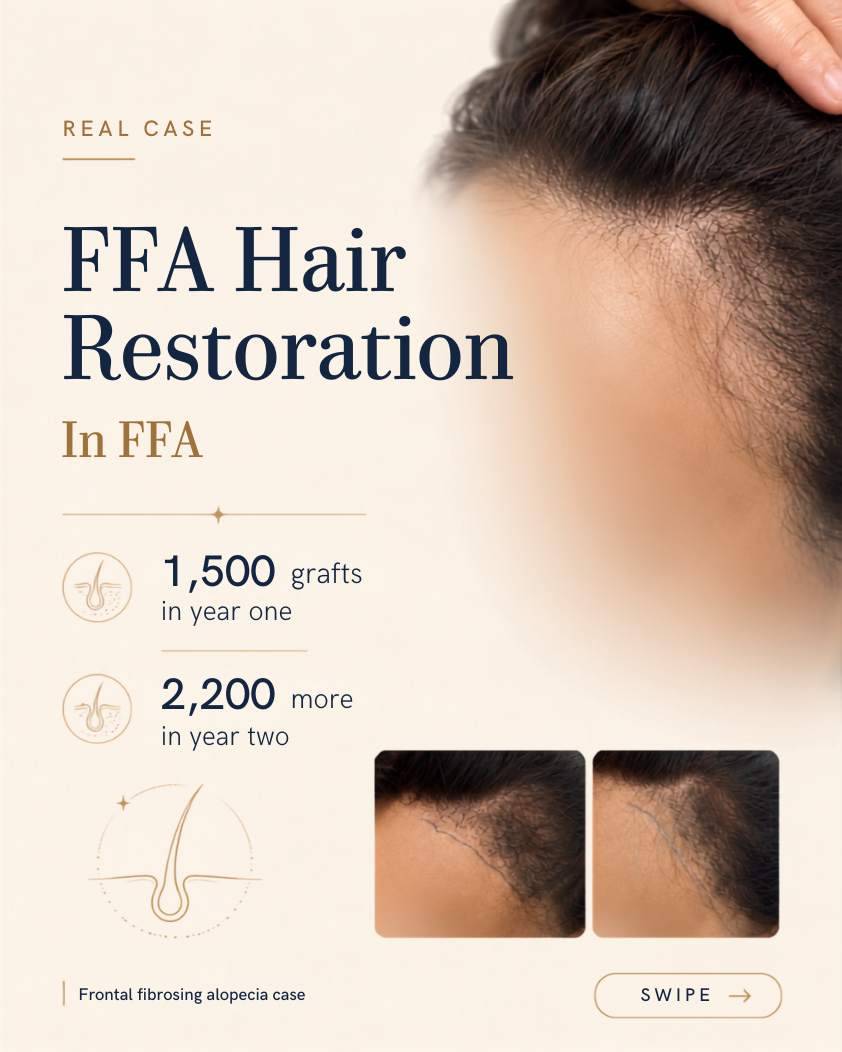
Real FFA Hair Transplant Case at Bijan Clinic
This patient had been diagnosed with Frontal Fibrosing Alopecia and presented with recession affecting the frontal hairline and temple areas.
Her restoration was completed over two procedures.
The patient’s staged FUE hair transplant plan was adapted to the condition of the frontal and temporal recipient areas.
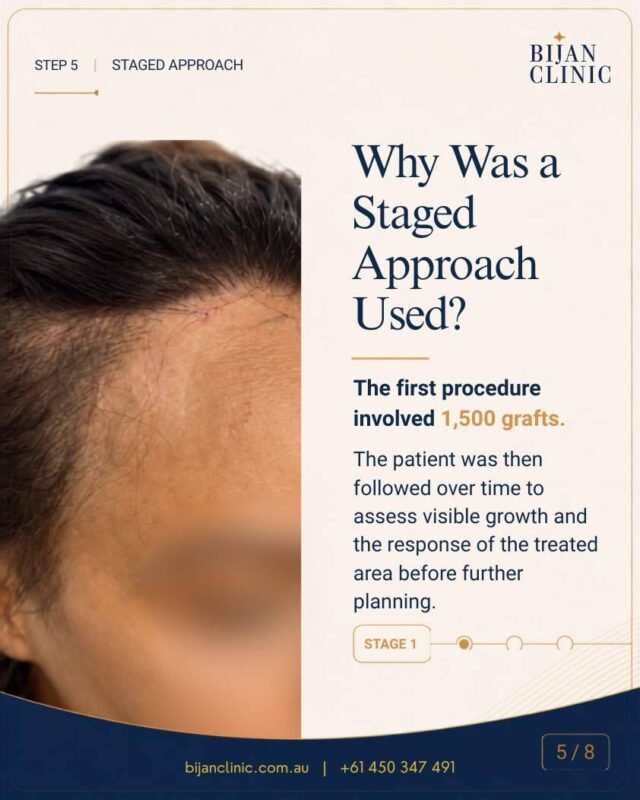
First Procedure: 1,500 Grafts
The first stage involved transplantation of 1,500 grafts into the recessed frontal area.
At the one-year review, the treated area showed encouraging visible growth and improved frontal coverage.
The first procedure was a planned stage of restoration rather than a test session.
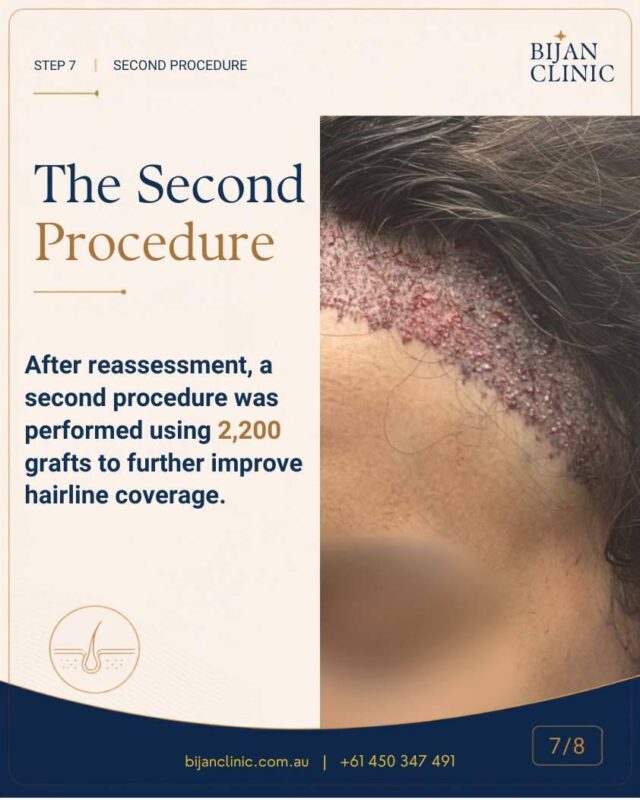
Immediate postoperative appearance after the second procedure. This is not the final result.
Second Procedure: 2,200 Grafts
Following reassessment, the patient returned for a second procedure.
A further 2,200 grafts were placed to extend and improve coverage in line with the updated treatment plan.
Total: 3,700 Grafts
Across both procedures, the patient received a total of 3,700 grafts.
Photographs taken immediately after the second procedure document the placement area only. They should not be interpreted as the final outcome of the second stage.
Because FFA is a chronic inflammatory scarring condition, continued observation remains important even when early growth appears encouraging.
What Results May Be Possible?
There is no single expected outcome for every patient with FFA.
Results may be influenced by:
- the condition of the recipient scalp
- donor hair quality
- the extent of scarring
- graft handling and placement
- the size of the area treated
- current and future disease activity
- postoperative care
- the patient’s individual healing response
Transplanted hair may begin to grow gradually over several months.
However, visible early growth does not guarantee that every graft will remain stable in the long term.
Patients should therefore understand that transplantation for FFA carries more uncertainty than transplantation for common pattern hair loss.
Does Hair Transplantation Stop FFA?
No.
A hair transplant does not stop the inflammatory process and should not replace medical management.
Patients may still require ongoing assessment or treatment from the clinicians managing their FFA.
The purpose of surgery is cosmetic restoration, not disease control.
When Might Surgery Be Postponed or Declined?
Hair transplantation may not be suitable when:
- the hairline is still progressing
- redness, scaling or other signs of activity are present
- the diagnosis is uncertain
- the donor area cannot support the planned restoration
- the recipient tissue is considered unsuitable
- expectations are unrealistic
- the patient expects surgery to cure the condition
- appropriate long-term follow-up is not possible
In some cases, postponing surgery may be the safer and more appropriate decision.
Frequently Asked Questions
Is a hair transplant successful for every patient with FFA?
No. Some selected patients may achieve a useful cosmetic improvement, while others may experience limited growth, reduced graft survival or further progression of the condition.
How long should FFA be stable before surgery?
There is no universally accepted period that guarantees a safe or successful result.
Previous reports have often involved patients whose disease appeared inactive for a sustained period, but timing must still be decided individually.
Can FFA become active again after surgery?
Yes.
A period of apparent stability does not guarantee that the condition will never progress again.
Is a second procedure always needed?
No.
Further surgery depends on the response to the first procedure, donor availability, disease activity and the patient’s goals.
Are immediate postoperative photos the final result?
No.
They show the design and graft placement immediately after surgery. Growth and maturation take place gradually and vary between patients.
Considering Hair Transplantation With FFA?
Hair restoration in a patient with Frontal Fibrosing Alopecia requires more than simply calculating graft numbers.
Diagnosis, disease activity, donor management, recipient scalp condition, hairline design and long-term expectations must all be considered together.
Bijan Clinic provides personalised hair and scalp assessments for patients considering hair restoration in Sydney.
Personalised Hair Assessment
Book a Personalised Assessment
Discuss your hair-loss pattern, donor area and treatment options with the Bijan Clinic team. Suitability for hair transplantation is assessed individually.
Medical Disclaimer
This article is provided for general educational purposes only. It does not replace individual medical diagnosis, treatment or advice. Suitability for hair transplantation must be assessed personally, and results, graft survival and future disease activity vary between patients.