
Eyebrow Transplant in a Patient with Frontal Fibrosing Alopecia
Eyebrow Transplant in a Patient with Frontal Fibrosing Alopecia: A Real Case
Written by Dr Bijan Shabani Bijan Clinic, Sydney
Eyebrow loss can happen for many reasons. Sometimes it is related to ageing or overplucking, but in other cases there is an underlying medical condition.
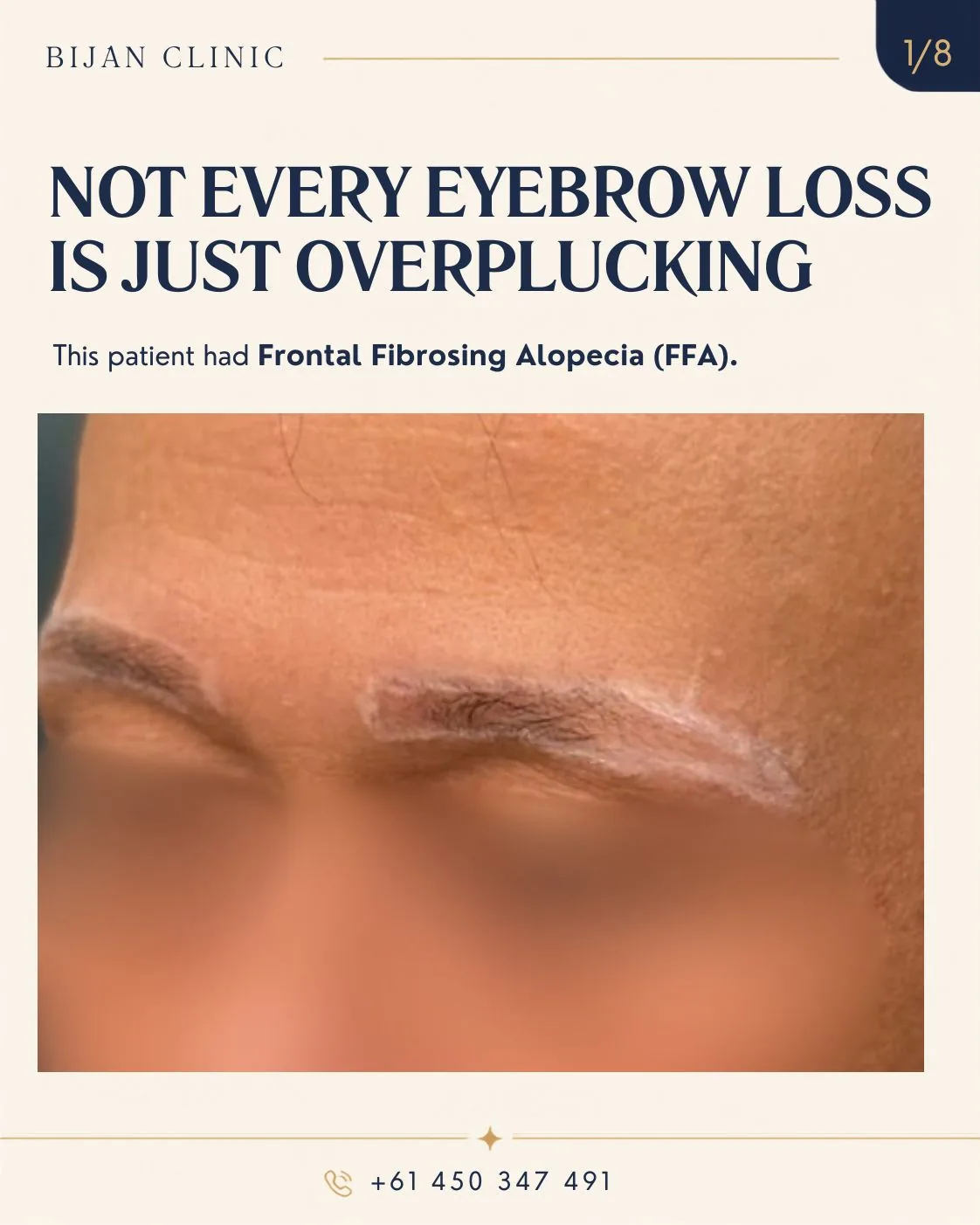
This patient had Frontal Fibrosing Alopecia (FFA), a form of scarring hair loss that can affect both the frontal hairline and the eyebrows.
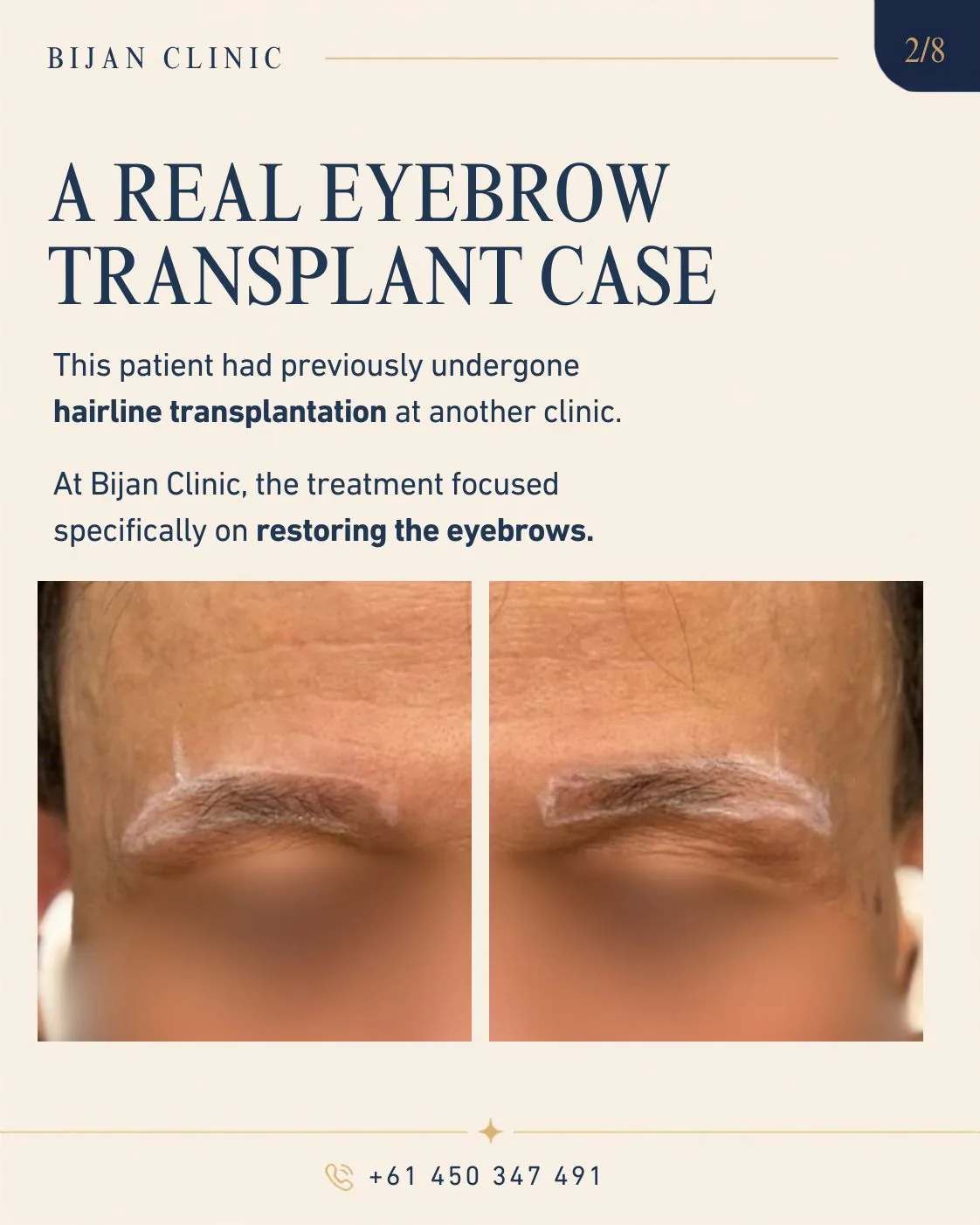
She had previously undergone hairline transplantation at another clinic. At Bijan Clinic, the focus was different: restoring the eyebrows.
This is important because an eyebrow transplant in someone with FFA is not the same as a routine eyebrow transplant. The condition itself is not treated by transplantation, and the long-term behaviour of transplanted hairs can be less predictable.
What Is Frontal Fibrosing Alopecia?
Frontal Fibrosing Alopecia is a type of scarring hair loss that usually affects the frontal and temporal hairline.
The eyebrows can also be involved. In some people, eyebrow thinning or loss may appear before changes at the scalp hairline become obvious.
FFA causes inflammation around affected hair follicles. Over time, this can lead to scarring and permanent follicle damage.
That is why eyebrow loss associated with FFA needs to be assessed differently from ordinary cosmetic eyebrow thinning.
About This Case
The patient had a known history of Frontal Fibrosing Alopecia and had previously undergone hairline transplantation elsewhere.
At Bijan Clinic, the treatment focused specifically on the eyebrows.
The images in this case show three different stages:
- eyebrow loss before treatment
- eyebrow design before graft placement
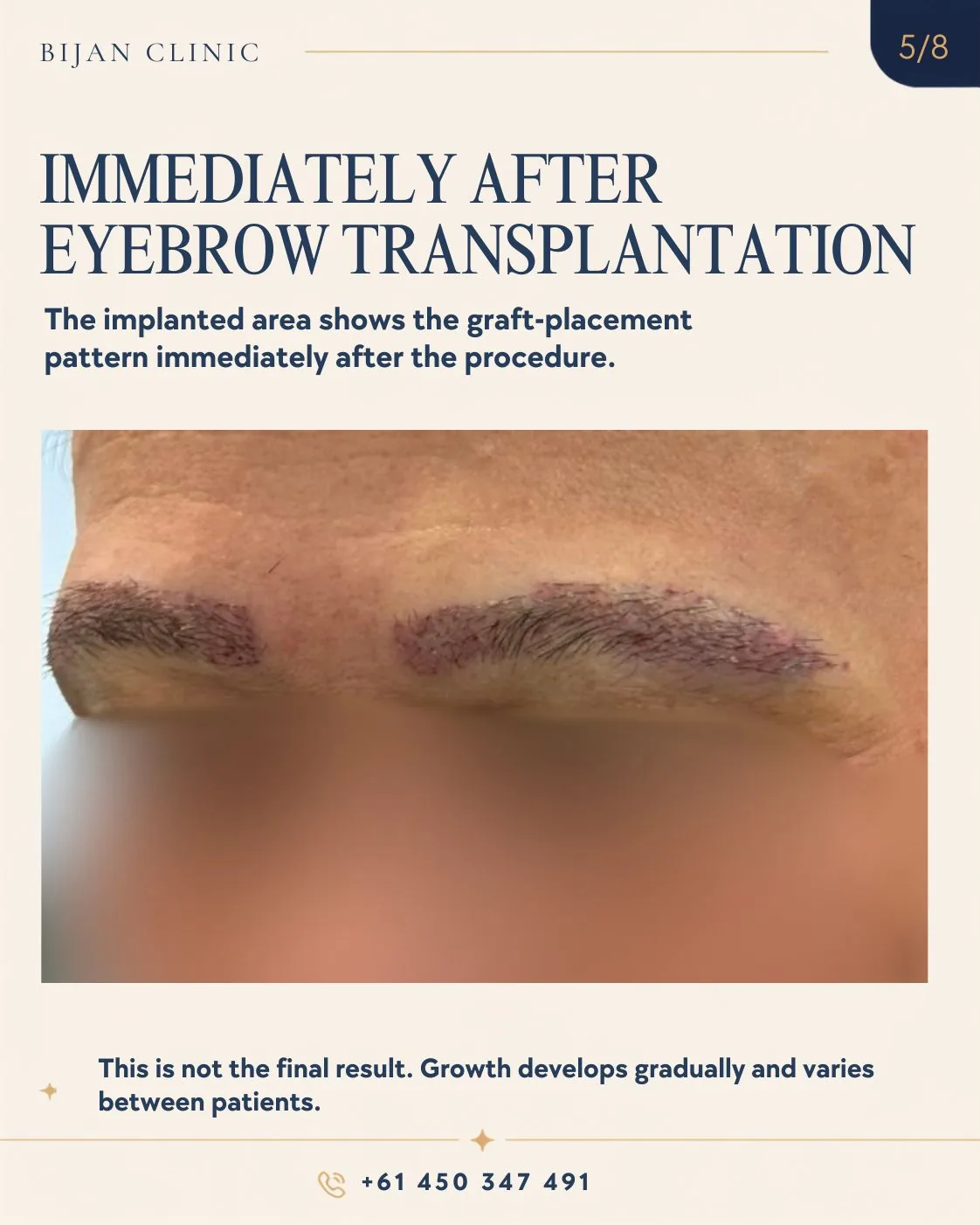
- the immediate postoperative appearance
The postoperative photographs are not final-result photographs. They show the eyebrows immediately after transplantation.
Can Someone with FFA Have an Eyebrow Transplant?
In some cases, yes.
However, FFA changes the way suitability needs to be assessed.
The important question is not simply whether eyebrow hair has been lost. The activity of the underlying condition also matters.
Published guidance suggests that transplantation may be considered in carefully selected patients when FFA is inactive.
Assessment may take into account:
- whether there are signs of active disease
- whether hair loss is still progressing
- the condition of the eyebrow area
- donor hair availability
- previous treatments
- existing eyebrow hair
- realistic expectations
Not everyone with FFA will be an appropriate candidate for transplantation.
Why Disease Activity Matters
Hair transplantation places new follicles into the recipient area.
If FFA is still active, the inflammatory process that caused the original hair loss may continue to affect the area.
This is why disease stability is an important part of assessment before transplantation is considered.
With FFA, the goal is not simply to replace missing hairs. The condition of the recipient area and the possibility of ongoing disease activity also need to be considered.
How the Eyebrow Design Was Planned
Before graft placement, the eyebrow shape was designed around the patient's existing features.
The planning considered:
- facial proportions
- remaining eyebrow hair
- natural brow shape
- symmetry
- hair direction
- the patient's preferred appearance
Eyebrow transplantation is not simply about adding more hairs.
Natural eyebrow hairs grow at different angles across the brow, and transplanted hairs need to be positioned in a way that works with the hairs already present.
Existing Eyebrow Hair Matters
The patient still had existing eyebrow hairs.
These hairs formed part of the design rather than being treated as something separate from the transplant.
Where appropriate, graft placement can be planned around existing hairs so that the transplanted and natural eyebrow hairs work together visually.
This can influence both the shape of the eyebrow and the distribution of the grafts.
What Do the Immediate Postoperative Photos Show?
The postoperative images show the grafts immediately after they were placed.
At this stage, the pattern of placement is clearly visible and temporary redness may be present around the treated area.
These photographs are useful for showing the design and distribution of the grafts, but they should not be mistaken for final before-and-after photographs.
Hair growth develops gradually after transplantation, and the final appearance varies between patients.
With FFA, there is an additional consideration: long-term graft survival may be less predictable than in people without scarring alopecia.

Does Eyebrow Transplantation Treat FFA?
No.
Eyebrow transplantation is used to restore hair in the eyebrow area. It does not treat the inflammatory condition responsible for Frontal Fibrosing Alopecia.
FFA may still require separate medical assessment and management.
For patients considering transplantation, it is important to understand the difference between treating the disease itself and restoring hair that has already been lost.
What Do We Know About Long-Term Graft Survival in FFA?
The available evidence is limited, but it highlights an important point.
Some patients with FFA can experience good initial eyebrow growth after transplantation, but this does not necessarily mean that every transplanted hair will remain permanently.
Published research has reported cases where transplanted eyebrow hairs began to thin again several years after treatment.
For this reason, patients with FFA should understand that long-term graft survival can be less predictable than in patients without scarring alopecia.
This does not automatically mean transplantation is unsuitable. It means the decision needs to be made with realistic expectations.
Why Expectations Matter More in FFA
Realistic expectations are important with any hair transplant, but particularly in FFA.
Eyebrow transplantation cannot guarantee:
- permanent graft survival
- complete eyebrow restoration
- prevention of future FFA activity
- treatment of the underlying disease
- the same result seen in another patient
The value of treatment depends on the individual patient, the condition of the recipient area and what they hope to achieve.
These limitations should be discussed before treatment.
Patient Feedback
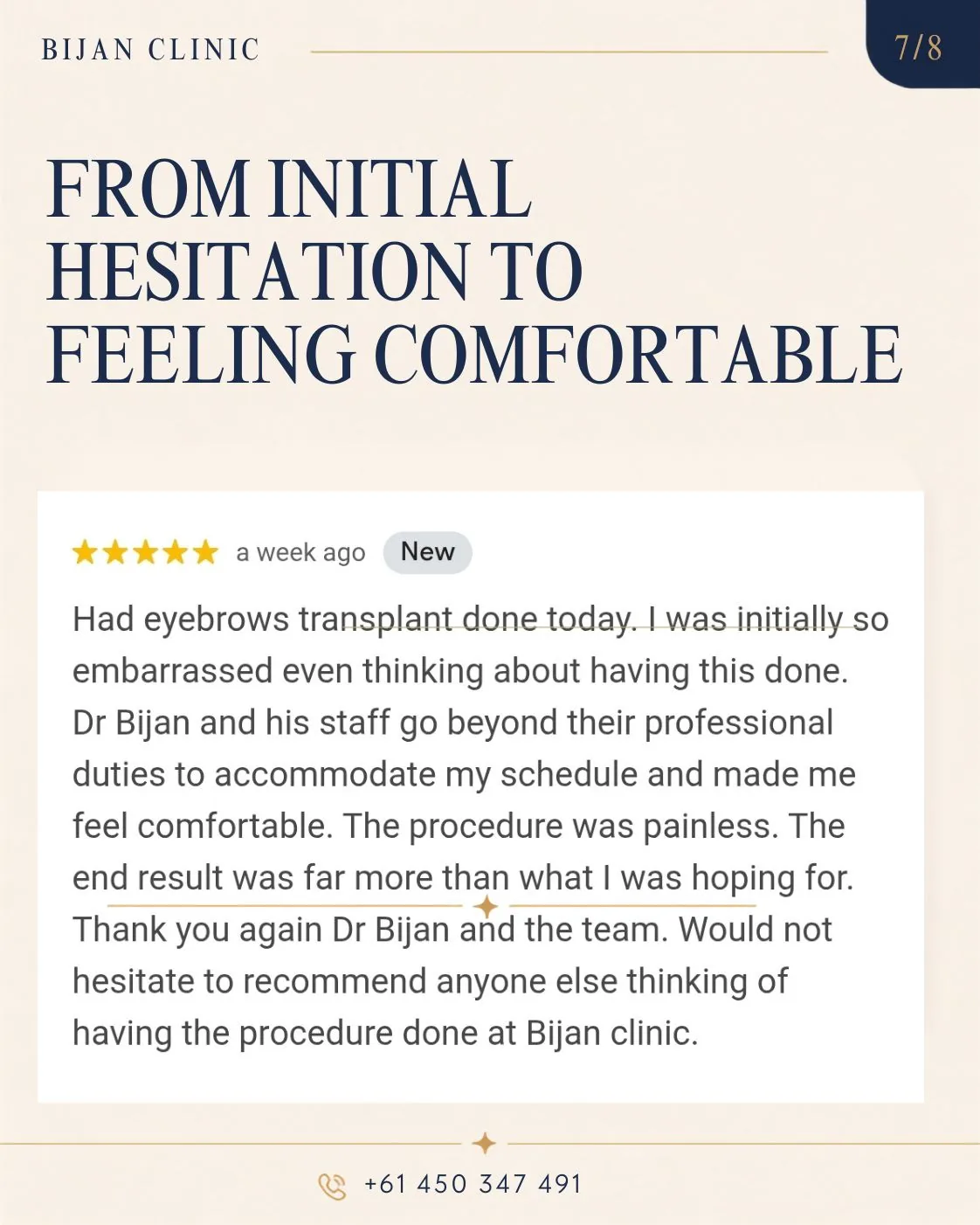
After the procedure, the patient shared a positive Google review about her experience at Bijan Clinic.
She described the procedure as more comfortable than she had expected and spoke positively about Dr Bijan Shabani and the clinic team.
Her comments reflect her personal experience.
They should not be interpreted as a guarantee that every patient will experience the same level of comfort, recovery or outcome.
Frequently Asked Questions
Can Frontal Fibrosing Alopecia cause eyebrow loss?
Yes. Eyebrow thinning and eyebrow loss are recognised features of FFA. In some patients, eyebrow changes may appear before obvious recession of the frontal hairline.
Can someone with FFA have an eyebrow transplant?
Possibly. Eyebrow transplantation may be considered in selected patients, particularly when the condition is inactive. Suitability needs to be assessed individually.
Does an eyebrow transplant cure FFA?
No. Transplantation can restore hair in the eyebrow area, but it does not treat the inflammatory condition responsible for FFA.
Can transplanted eyebrow hairs be lost again?
Yes. Long-term graft survival in FFA can be variable, and some transplanted hairs may be lost over time.
Why does FFA need to be stable before transplantation?
If the condition is still active, ongoing inflammation and scarring may continue to affect the recipient area and potentially the transplanted follicles.
Are the photographs in this case the final result?
No. The photographs show the eyebrow design and immediate postoperative appearance. They do not represent the mature or long-term result.
Considering Eyebrow Restoration with FFA?
Eyebrow loss associated with Frontal Fibrosing Alopecia requires more careful assessment than ordinary cosmetic eyebrow thinning.
Before transplantation is considered, factors such as disease activity, the recipient area, donor hair and realistic long-term expectations need to be reviewed.
You can learn more about eyebrow transplantation in Sydney or read more about Frontal Fibrosing Alopecia and hair transplantation .
Book a ConsultationMedical References
- DermNet NZ — Frontal Fibrosing Alopecia
- Audickaite A, Alam M, Jimenez F. Eyebrow Hair Transplantation in Frontal Fibrosing Alopecia: Pitfalls of Short- and Long-Term Results.
- SOFFIA International Expert Alliance — international consensus on the management and monitoring of Frontal Fibrosing Alopecia