

Natural Hairline Design: How a Hair Transplant Is Planned to Look Natural
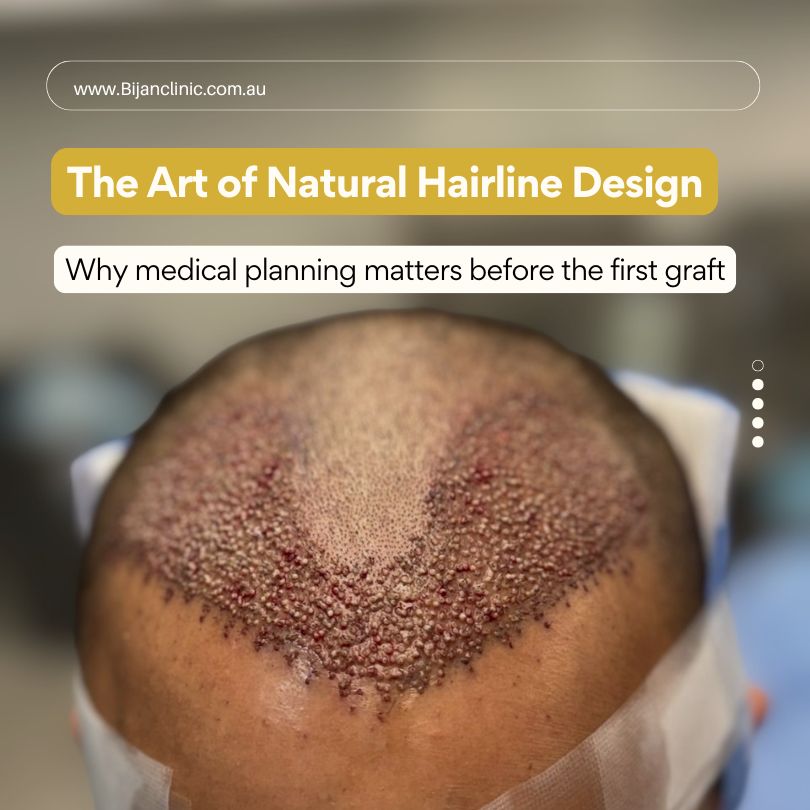
A natural-looking hair transplant begins before a single graft is extracted or implanted.
The position of the new hairline, its shape, density transition, direction of growth and relationship with the patient’s face all need to be planned carefully. A high graft number cannot compensate for a hairline that has been placed too low, drawn too straight or designed without considering future hair loss.
At Bijan Clinic in Sydney, hairline planning begins with an individual assessment of the patient’s facial proportions, existing hair-growth pattern, donor supply, age and long-term restoration needs.
This guide explains how a natural hairline is designed, why male and female hairlines require different planning and how graft angle, direction and distribution influence the final appearance.
Natural results depend on more than graft numbers. Learn how the complete hairline transplant procedure is planned and performed at Bijan Clinic.
What Is Natural Hairline Design
Natural hairline design is the process of planning the position, shape and detailed structure of a new frontal hairline before hair transplantation.
The goal is not to create a perfectly straight or completely symmetrical line. Natural hairlines usually contain subtle variations in height, direction and density. They also become progressively denser behind the fine hairs at the leading edge.
A well-planned design should look appropriate:
- From the front and side
- When the hair is styled backwards
- At close viewing distance
- As the patient becomes older
- If the surrounding natural hair continues to thin
- In relation to the patient’s available donor supply
Natural hairline design combines aesthetics with long-term medical planning. The lowest possible line is not necessarily the most suitable one.
Why Hairline Design Matters More Than Graft Numbers
Patients often focus on the number of grafts they will receive. Graft numbers matter, but they do not determine whether a result will look natural.
A procedure involving a large number of follicles can still appear artificial when:
- The hairline is too low
- The shape does not suit the face
- The leading edge is too dense
- Thick multi-hair grafts are placed at the front
- Every graft follows the same angle
- The line is completely straight
- The temples do not connect naturally with the frontal hairline
- Future hair loss has not been considered
Conversely, a carefully planned procedure may create a convincing visual improvement with a more conservative number of grafts.
The design determines where the available follicles will be used. Surgical technique determines how accurately that design is translated into the scalp. Both are important, but adding more grafts cannot correct a fundamentally unsuitable plan.
What Makes a Transplanted Hairline Look Natural?
Several details work together to create a natural result.
An age-appropriate position
The proposed hairline should suit the patient’s current age and remain visually balanced as they get older.
A very low, juvenile hairline may look appealing during the consultation but can create long-term problems. It may consume a large number of donor grafts and become disconnected from the surrounding hair if native hair loss continues.
A more conservative position can often provide stronger coverage while preserving grafts for possible future treatment.
Facial proportions
Hairline position should be considered in relation to:
- Forehead height
- Brow position
- Facial width
- Temple shape
- Hairline curvature
- Side-profile balance
- Existing facial asymmetry
Simple measurements can help guide the design, but no single mathematical ratio is suitable for every face. Clinical judgement and visual balance remain important.
A soft transition zone
A natural hairline does not usually begin with a dense wall of thick hairs.
The front edge typically contains finer, more widely spaced hairs. Density increases gradually behind this transition area.
During transplantation, suitable single-hair follicular units may be selected for the front, while grafts containing more hairs can be positioned farther behind to build coverage without creating an abrupt leading edge.
Controlled irregularity
Natural hairlines are not perfectly straight.
Small variations, sometimes called micro-irregularities, can prevent the transplanted line from looking drawn or artificial. These variations must be deliberate and balanced; random placement alone does not produce a natural result.
The aim is controlled imperfection—not an untidy or asymmetrical design.
Correct hair angle and direction
Hair does not grow vertically from the scalp along the frontal hairline.
The natural exit angle is usually low, and the direction changes gradually across the front and toward the temples. Recipient sites should reproduce these changes as closely as possible.
A graft that grows successfully but points in the wrong direction may remain difficult to style and visually noticeable.
Integration with the temples
The frontal hairline should not be designed as an isolated line across the forehead.
Temple recession, temporal points and the transition into the side hair all influence facial framing. In some patients, preserving a degree of temporal recession looks more natural than creating a fully rounded or excessively low hairline.
The appropriate approach differs between male and female patients and also varies according to age and hair-loss pattern.
How Is a Hairline Designed Before a Transplant
Hairline planning should begin with assessment rather than drawing.
Step 1 — Assessing the cause and pattern of hair loss
The first question is not where the new line should be placed. It is why the existing hairline has changed.
The assessment may consider:
- Pattern hair loss
- Naturally high hairline
- Temple recession
- Previous surgery or scarring
- Traction-related loss
- Diffuse thinning
- Previous transplant work
- Speed of recent hair loss
The cause and stability of the condition influence whether transplantation is suitable and how conservative the design should be.
Step 2 — Evaluating the donor area
Every design must be supported by an adequate donor supply.
The assessment may include:
- Donor density
- Hair calibre
- Follicular-unit composition
- Hair texture and curl
- Potential future donor needs
- Signs of diffuse donor thinning
- Evidence of previous overharvesting
A large recipient area combined with a limited donor supply may require a higher or more conservative hairline.
Step 3 — Reviewing facial structure
The proposed line is considered in relation to the forehead, temples and overall facial proportions.
The doctor may assess the patient from several angles rather than relying only on a straight-on photograph.
The central point, temporal corners and curvature should form one connected design.
Step 4 — Drawing and reviewing the proposed hairline
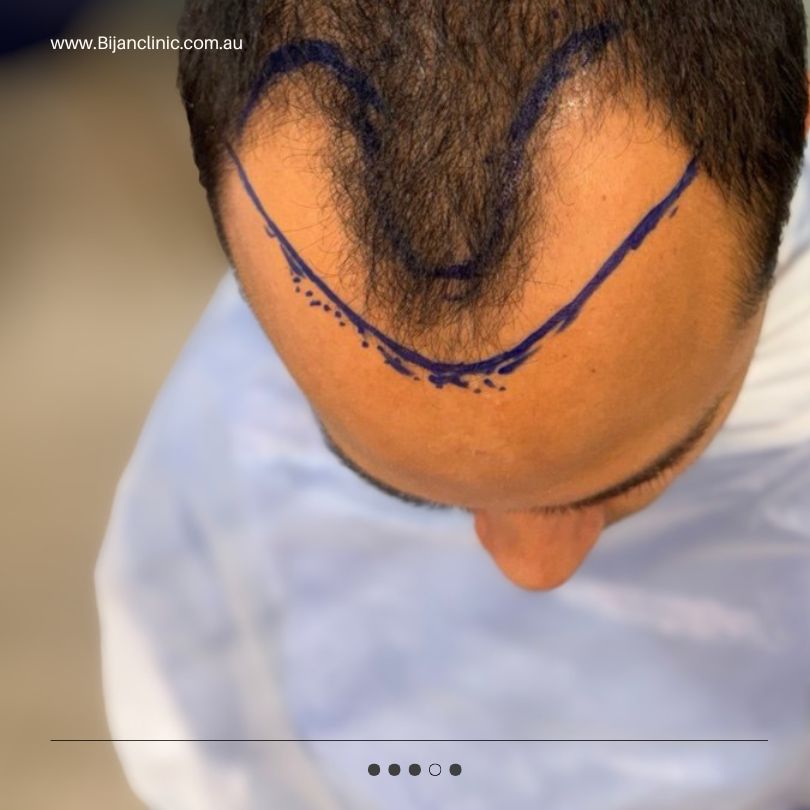
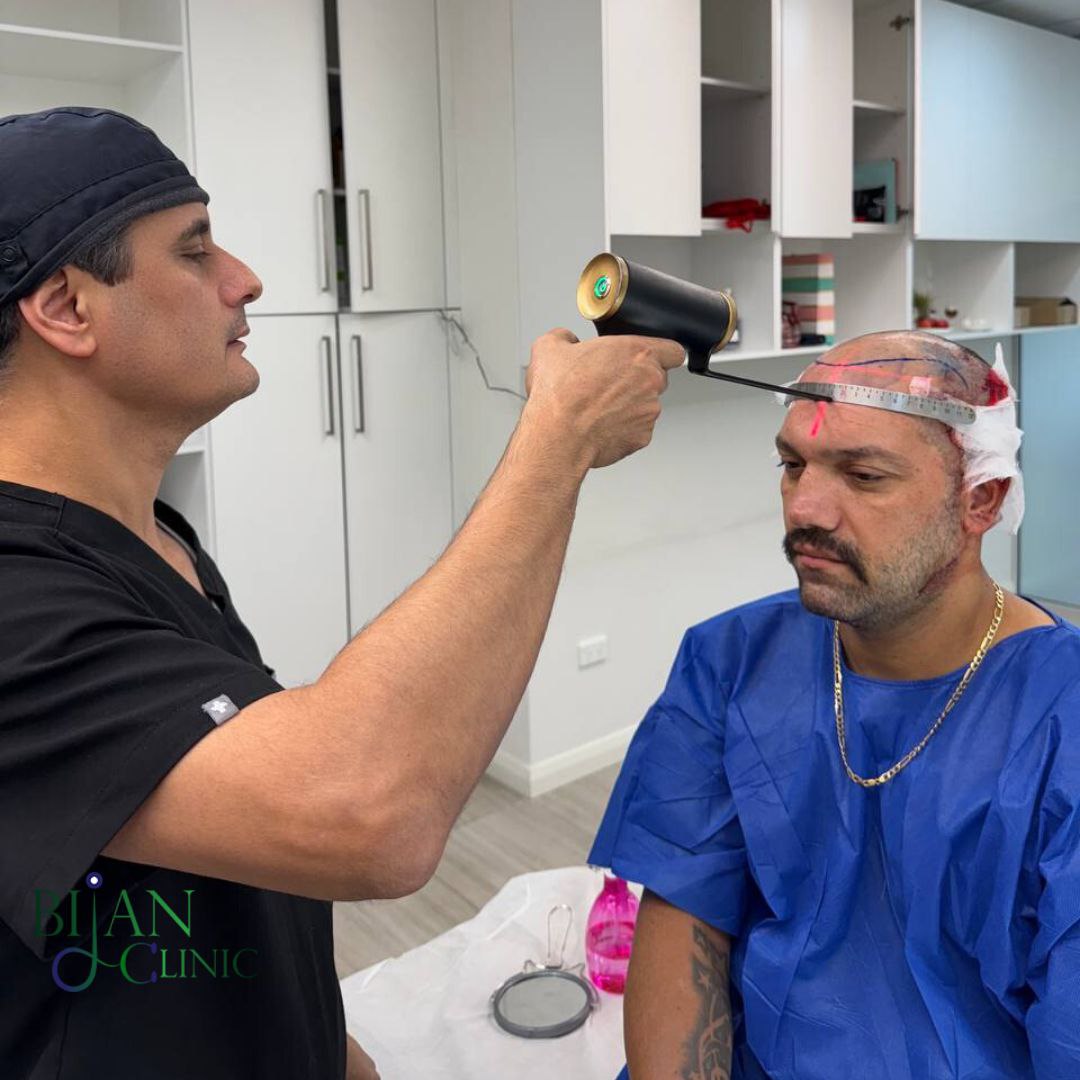
The design is drawn directly on the patient’s scalp.
The patient should be able to review the shape and discuss concerns before the procedure begins. However, a requested hairline may need to be adjusted when it would require excessive grafts, conflict with the natural growth pattern or create an unsustainable long-term result.
Step 5 — Estimating graft requirements
Once the treatment area has been defined, graft requirements can be estimated.
The estimate depends on:
- Width and depth of the recipient area
- Existing hair within the zone
- Hair calibre
- Desired visual coverage
- Temple involvement
- Donor availability
- Need for soft frontal transition
- Possible future hair-loss progression
The graft estimate should follow the design. The design should not be forced to fit a predetermined marketing package.
Step 6 — Planning graft distribution
The clinical plan determines where different follicular units will be positioned.
This may include:
- Finer single-hair grafts at the leading edge
- Greater density behind the transition zone
- Lower implantation angles at the front
- Directional changes around the temples
- Strategic blending with existing hair
- Preservation of donor follicles for future needs
Male vs Female Hairline Design
Male and female hairlines should not be treated as identical templates.
Male hairline design
A male hairline often requires careful consideration of:
- Existing or potential Norwood-pattern recession
- Temporal corners
- Future frontal and crown loss
- Age-appropriate positioning
- Donor conservation
- Risk of leaving an isolated transplanted front
An excessively rounded or low male hairline may appear unnatural, particularly if the native hair behind it continues to recede.
The design often preserves some temporal recession while improving the frontal frame.
Female hairline design
A female hairline may require:
- A softer, more rounded frontal shape
- Careful temple integration
- Finer hairs along the edge
- Assessment of a naturally high forehead
- Evaluation of traction-related loss
- Consideration of diffuse thinning
- Different proportions around the side fringe
Planning can be more complex when the recipient area includes scar tissue. See how a test transplant was used in this female hairline scar case.
Women with diffuse thinning are not automatically suitable for transplantation because the donor area may also be affected.
For a more detailed discussion of suitability and treatment planning, read our guide to hairline transplant for women.
Why Placing the Hairline Too Low Can Be a Mistake
A low hairline may seem attractive when viewed as a drawing during consultation, but it can create several problems.
It may:
- Require substantially more grafts
- Reduce the density achievable behind the front edge
- Use donor follicles that may be needed later
- Look less appropriate as the patient ages
- Become isolated if native hair continues to thin
- Increase the size and complexity of future procedures
- Create an unnatural relationship with the temples
Lowering a hairline by even a small distance can significantly increase the recipient area. The required graft number rises because the new zone extends across the width of the forehead.
For patients whose main concern is a naturally high forehead rather than recession, read our dedicated guide to hairline lowering with FUE.
Can a Hairline Be Perfectly Symmetrical?
Complete symmetry is not always natural or achievable.
Human faces are not perfectly symmetrical, and natural hairlines usually reflect some of those differences. The purpose of design is to create visual balance rather than measure identical distances on both sides.
A clinically planned hairline may correct obvious imbalance while retaining small natural variations.
Excessive emphasis on perfect symmetry can make the hairline look artificial, particularly when combined with a straight leading edge and uniform density.
Why Hair Angle and Graft Placement Matter
The visual success of a transplant depends not only on where each follicle is placed but also on how it is placed.
Important variables include:
- Exit angle from the scalp
- Direction of growth
- Distance between grafts
- Depth of recipient sites
- Distribution of single- and multi-hair grafts
- Existing hair direction
- Curvature around the temples
- Density transition
Hair near the front generally lies flatter than hair farther back on the scalp. At the temples, the direction can become even more horizontal.
Incorrect angles may cause transplanted hair to stand upright or cross surrounding hairs, making the result harder to style.
How Future Hair Loss Affects Today’s Design
Hair transplantation relocates selected follicles, but it does not automatically stop the loss of existing non-transplanted hair.
A design that looks balanced today may become unsuitable if it does not account for possible future recession.
Long-term planning may include:
- Choosing a sustainable hairline height
- Preserving donor follicles
- Avoiding an isolated frontal island
- Assessing family and personal loss patterns
- Discussing non-surgical management where appropriate
- Planning the density around existing native hair carefully
Younger patients and people with actively progressing loss may require a particularly conservative approach. In some cases, surgery may be delayed until the pattern is more predictable.
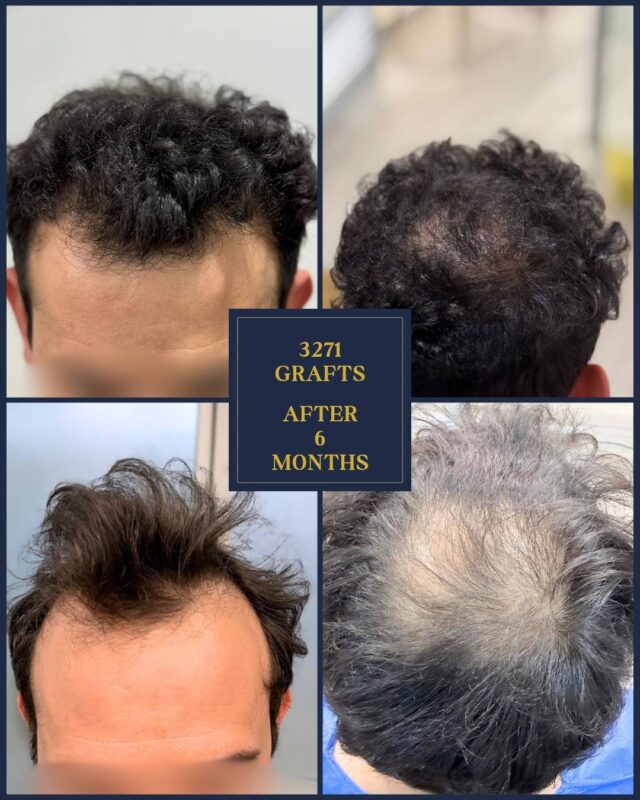
A Real Hairline Design Case at Bijan Clinic
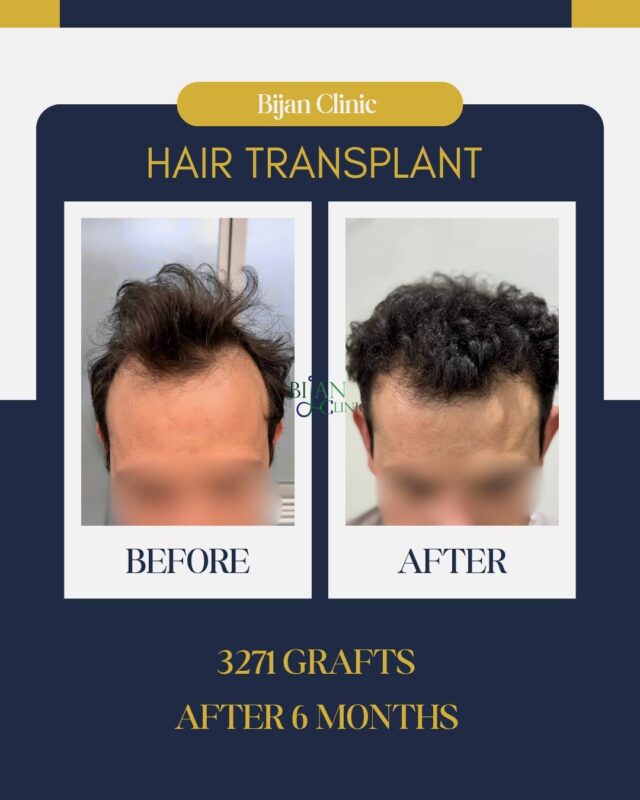
Patient concern
Frontal hairline recession with deeper temporal corners, together with visible thinning extending through the upper scalp. The patient was concerned that the receded hairline was weakening facial framing and creating an older appearance.
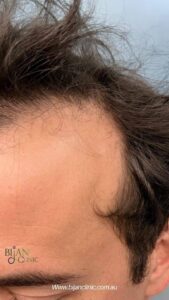
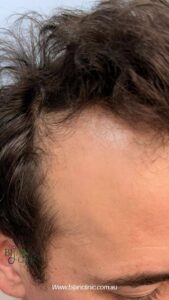
What was assessed
- Current frontal and temporal recession pattern
- Visible thinning behind the hairline and through the upper scalp
- Donor supply required for a 3,271-graft procedure
- Hair calibre, texture and natural growth direction
- Facial proportions and the existing frontal frame
- Risk of further recession and the need for a design that would remain appropriate over time
- The amount of realistic coverage achievable in one procedure
The patient’s age, measured donor density and requested hairline position are not confirmed in the available case information.
Why this design was selected
The hairline was positioned to improve facial framing without creating an excessively low or unnaturally straight line. The temporal corners were softened while retaining a mature shape.
A lower design was not selected because it would have required more donor grafts at the front and reduced the number available for the thinning areas behind the hairline and across the upper scalp.
Graft-placement strategy
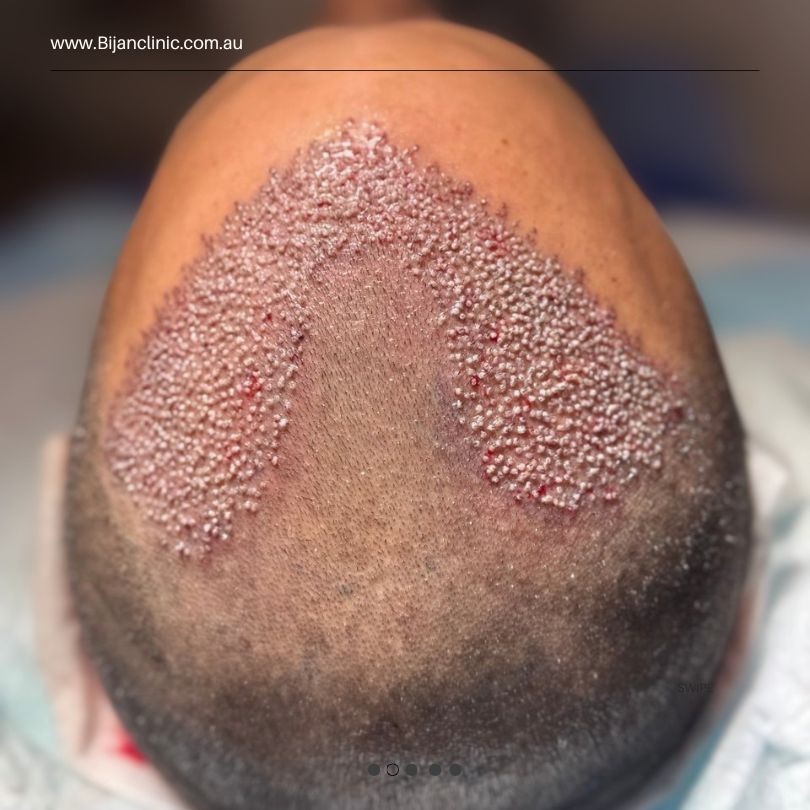
Finer grafts were placed along the leading edge to create a softer, less defined transition. Greater density was placed behind this transition zone to improve visual coverage.
The grafts were angled to follow the patient’s natural growth direction and help the transplanted hair blend with the surrounding native hair. Grafts were also distributed behind the frontal edge and through the thinning upper-scalp areas rather than being concentrated only along the hairline.
Case details
Technique: FUE
Confirmed graft count: 3,271 grafts
Image timing: Before treatment / immediate post-operative placement / six months
Current status: Developing result at six months
Frequently Asked Questions About Natural Hairline Design
Can I choose the position of my new hairline?
You should be involved in reviewing and approving the proposed design. However, the doctor may recommend changing the requested position when it would use too many grafts, conflict with your natural proportions or create an unsustainable long-term result.
What makes a transplanted hairline look natural?
A natural appearance usually depends on an age-appropriate position, fine single-hair grafts at the front, low and changing angles, controlled irregularity and a gradual transition into greater density.
Should a hairline be perfectly straight?
Usually not. Natural hairlines generally contain subtle variations. A perfectly straight and uniformly dense line may appear artificial.
Can a hairline be designed too low?
Yes. A very low design may consume excessive donor grafts, look less appropriate with age and create problems if the surrounding native hair continues to recede.
Are male and female hairlines designed differently?
Often, yes. Male designs may preserve more temporal recession and need to account carefully for future pattern loss. Female designs are often softer and may require different temple and side-fringe integration.
Why are single-hair grafts used at the front?
Fine single-hair units help create a softer leading edge. Placing thick multi-hair units directly at the front can produce an abrupt or plug-like appearance.
Does a higher graft count create a more natural result?
Not necessarily. Graft numbers influence coverage, but naturalness also depends on placement, angle, distribution, hair characteristics and the overall design.
Can the design be changed on procedure day?
The final markings are normally reviewed before implantation begins. Adjustments may be possible before the recipient sites are created, provided they remain compatible with donor supply and the treatment plan.
Will the hairline still look natural if my hair loss continues?
That depends on the design and how the native hair changes over time. A conservative, age-appropriate position and long-term donor planning can reduce the risk of the transplanted front becoming isolated.
How many grafts are needed for a natural hairline?
There is no fixed number. Requirements depend on the area being treated, hair calibre, existing density, temple involvement, donor supply and the desired level of coverage.
For complete information about the procedure, cost, graft planning and recovery, visit our hairline transplant guide.