

How a Hair Transplant Is Planned: A Real Patient Case
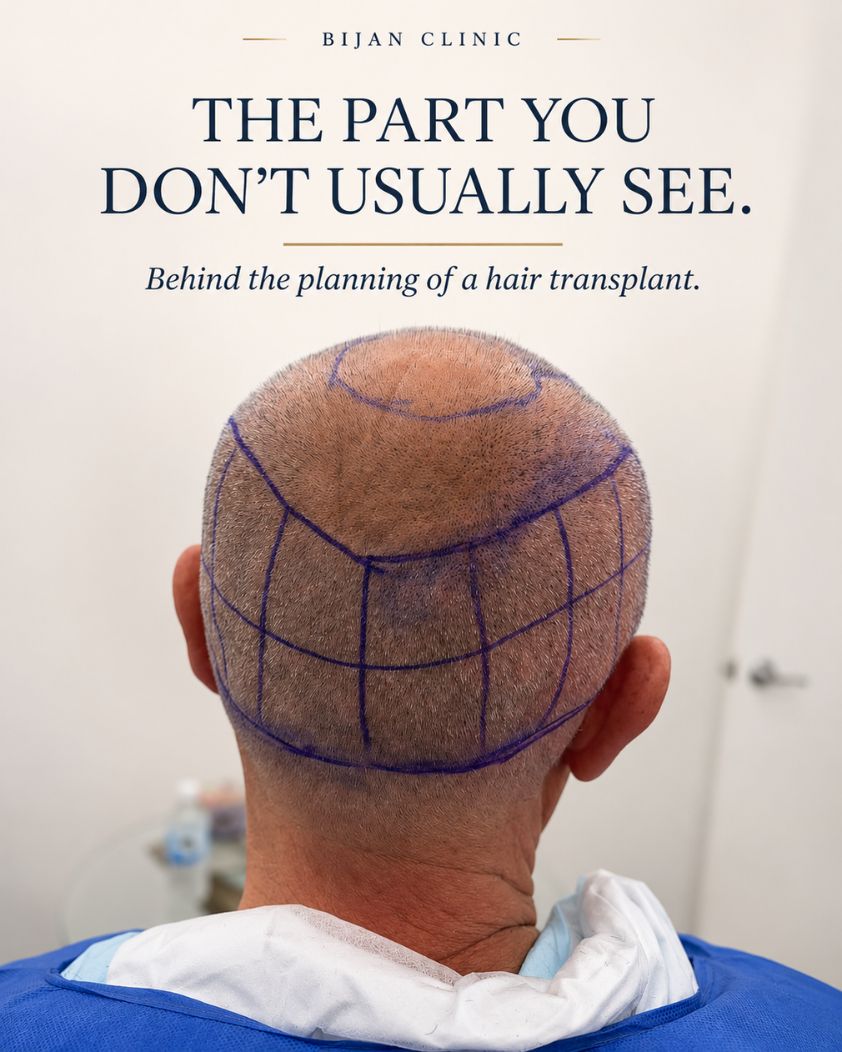
A hair transplant does not begin with graft extraction. It begins with an assessment of the patient’s hair-loss pattern, existing hair, donor supply and the areas that may be considered for treatment.
This real patient case documents several stages of hair transplant planning, from the preoperative assessment and scalp markings to the appearance of the recipient and donor areas immediately after the procedure.
The photographs do not show a final result. They document how different areas were assessed and planned before treatment and how the scalp appeared immediately afterwards.
Quick Answer: What Is Hair Transplant Planning?
Hair transplant planning is the process of assessing the patient’s existing hair loss, donor area, hair characteristics and treatment goals before graft extraction and placement begin.
The plan may consider:
- The pattern and possible progression of hair loss
- The size and location of the proposed recipient areas
- Existing hair within and around those areas
- Available donor density and hair characteristics
- Hairline position and design
- Graft distribution
- The direction and angle of transplanted hairs
- How the donor supply may need to be managed over time
- The patient’s individual treatment priorities
There is no single plan or graft number that is suitable for every patient.
Assessing the Hair-Loss Pattern Before Treatment
The first stage is to assess the patient’s existing hair and the distribution of hair loss.
This assessment helps identify which areas may be suitable for treatment and whether the available donor supply is likely to support the proposed plan.
It is also important to look beyond the most visible area of concern. Hair loss may involve the frontal hairline, temples, mid-scalp and crown in different combinations.
The treatment plan therefore needs to consider the scalp as a whole rather than treating each area in isolation.
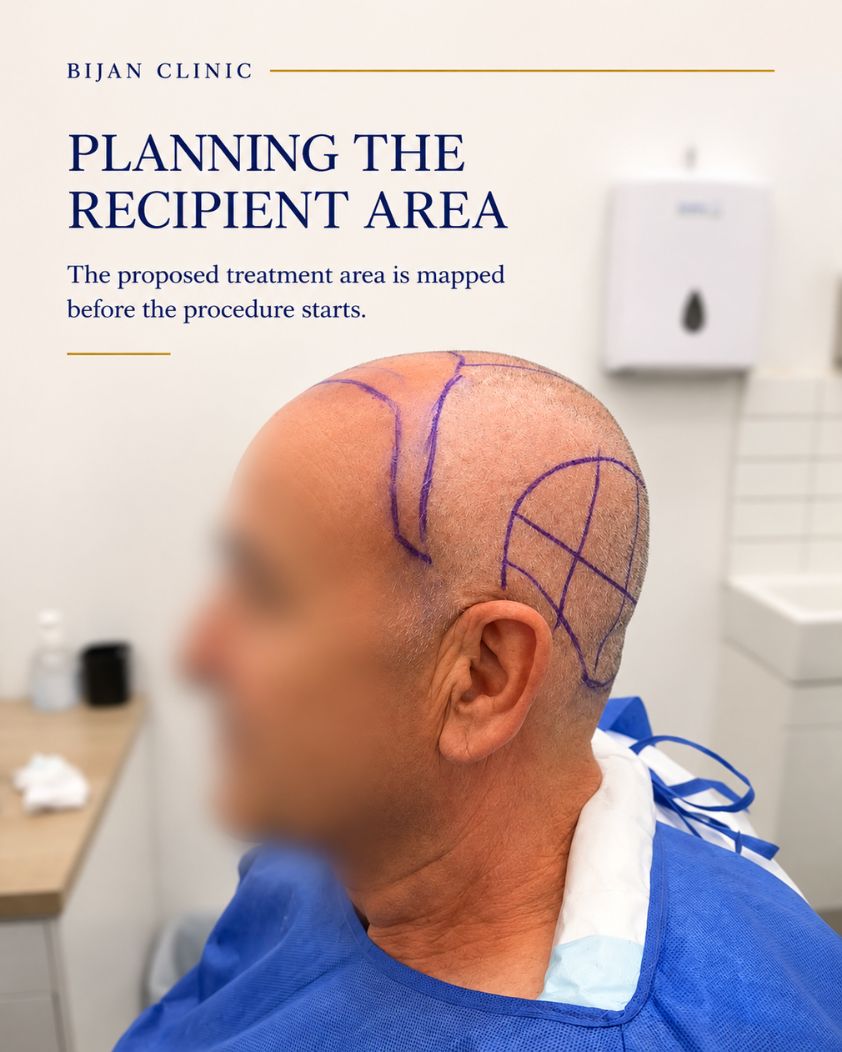
Mapping the Proposed Recipient Areas
The recipient area is the part of the scalp where extracted follicles are placed.
Before the procedure, the proposed treatment zones may be marked on the scalp. These markings help document the planned boundaries and distribution of the recipient areas.
They do not mean that every marked section will receive the same number of grafts or level of density. Graft distribution needs to reflect the patient’s existing hair, treatment priorities and available donor supply.
Reviewing the Crown and Existing Hair
Crown restoration requires different planning from frontal hairline restoration.
The crown has a changing pattern of hair direction and may involve a relatively large surface area. The treatment plan needs to consider the patient’s remaining hair, the size of the thinning area and how the available grafts may be distributed.
The crown should also be considered in relation to the front and mid-scalp. Using a large proportion of the donor supply in one area may limit what can be achieved elsewhere.
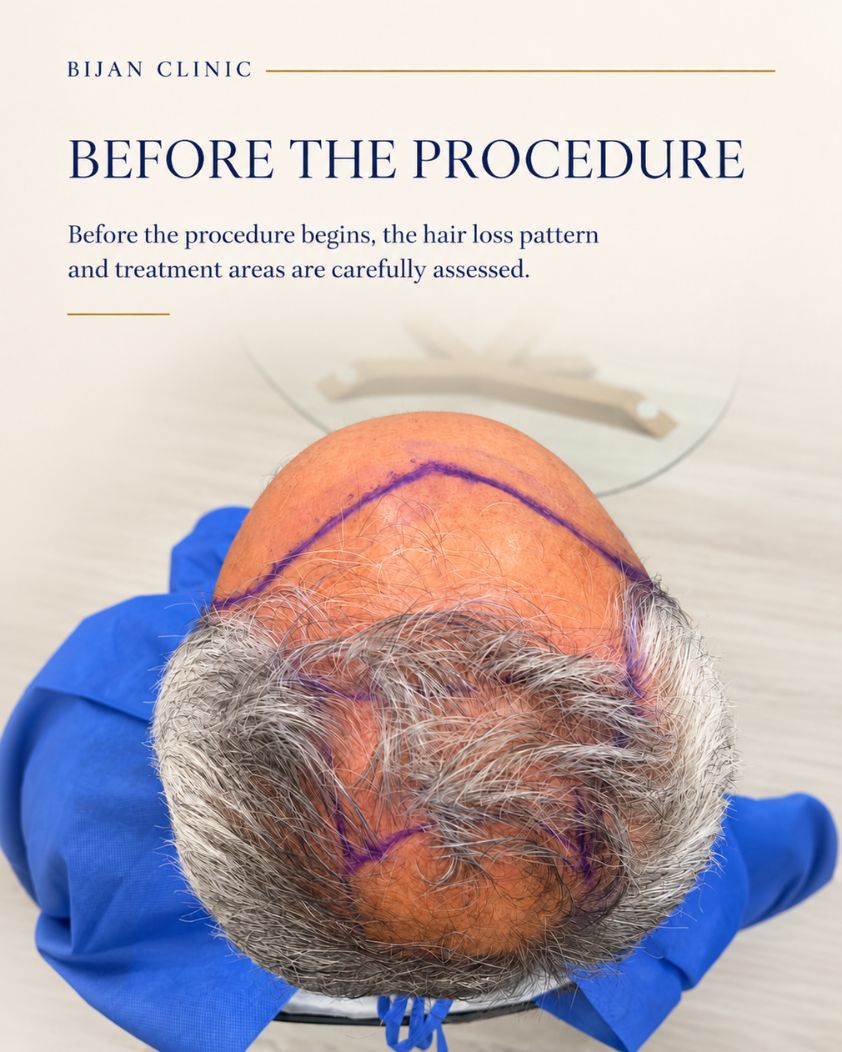
Planning Multiple Areas of the Scalp
Some patients have hair loss involving more than one part of the scalp.
When the frontal area, mid-scalp and crown are all being considered, the proposed treatment zones may be divided into sections. This helps the treating doctor plan how grafts may be distributed across the available surface area.
These markings are part of the surgical plan. They do not represent a guaranteed density or final result.
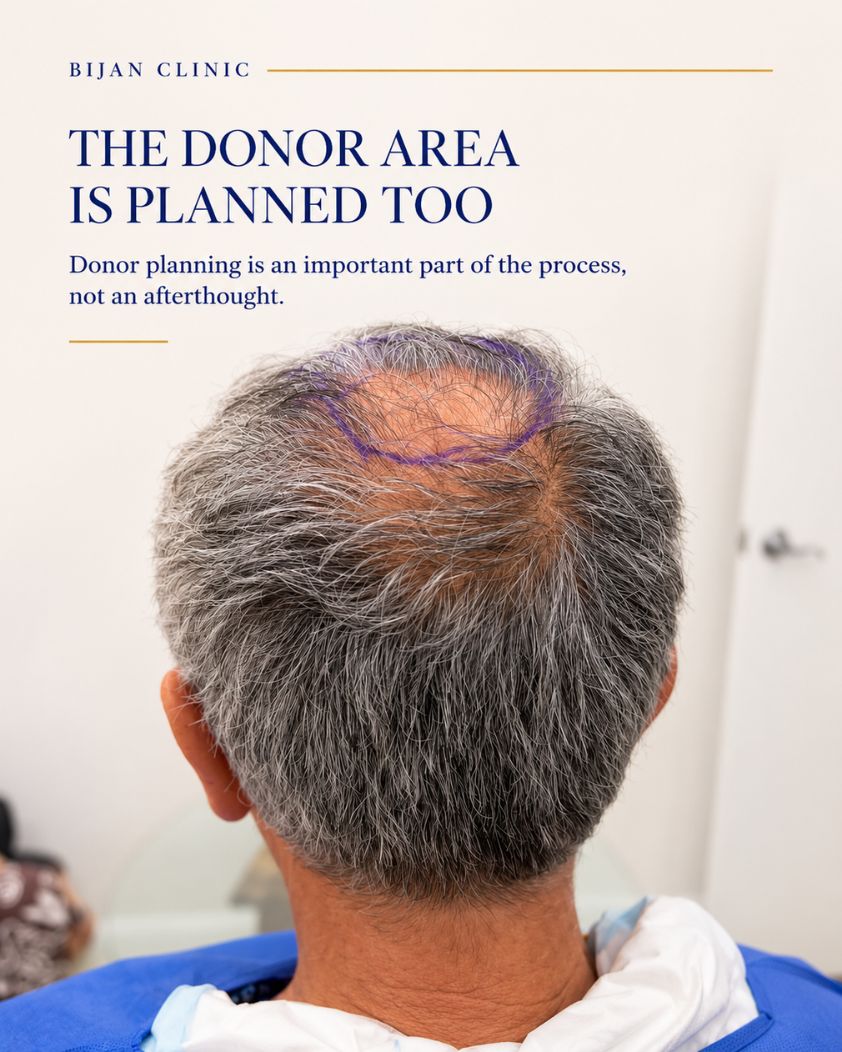
Why the Donor Area Is Assessed Separately
The donor area is the part of the scalp from which suitable follicles are extracted.
In most scalp hair transplants, donor follicles are taken from selected areas at the back or sides of the head. However, not every part of the back of the scalp is automatically suitable for extraction.
Assessment may include:
- Donor density
- Hair calibre and texture
- The distribution of available follicles
- The size of the proposed recipient areas
- The patient’s wider pattern of hair loss
- The effect extraction may have on the donor area
- Whether donor hair may need to be preserved for future treatment
A hair transplant redistributes existing follicles; it does not create a new supply of hair. This is why the donor area needs to be managed carefully.
You can read more in our guide to the hair transplant donor area.
How Donor Supply Affects the Treatment Plan
The proposed recipient area and the available donor supply need to be considered together.
A large treatment area does not automatically mean that an unlimited number of grafts can or should be extracted. The plan must balance the desired coverage with the characteristics and capacity of the donor area.
Two patients with a similar pattern of hair loss may require different plans because their donor density, hair calibre, scalp characteristics and long-term needs are different.
Hairline position also affects graft requirements. A lower or broader hairline may require more grafts and may leave fewer follicles available for other areas.
Read more about natural hairline design and the factors considered before a frontal hairline is created.
Planning Can Be More Complex in Some Patients
Some patients require additional assessment because of scarring, previous surgery, an underlying hair-loss condition or earlier hair-transplant treatment.
In these cases, the condition of the recipient skin, blood supply, disease activity, existing scars and previous graft placement may affect suitability and predictability.
Examples of more complex cases include:
- A staged hair transplant case involving Frontal Fibrosing Alopecia
- Hair transplantation into a scar after eyebrow-lift surgery
These cases should not be used to predict another patient’s outcome. Each patient requires an individual assessment.
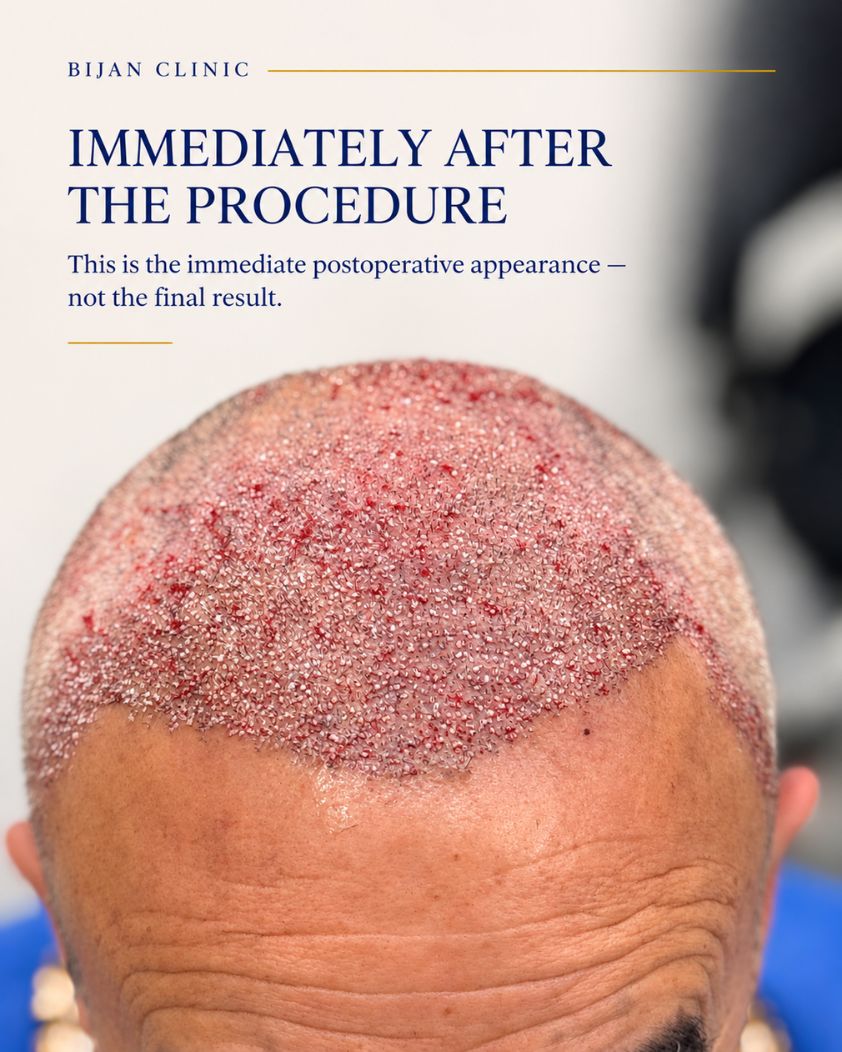
What Does the Recipient Area Look Like Immediately After Treatment?
Immediately after graft placement, the recipient area may show redness, small scabs and visible implanted hairs.
The placement pattern can be seen clearly at this stage, but this is not the final result. Some transplanted hair shafts may shed during the following weeks before new growth gradually becomes visible.
Healing, shedding and hair growth vary between patients.
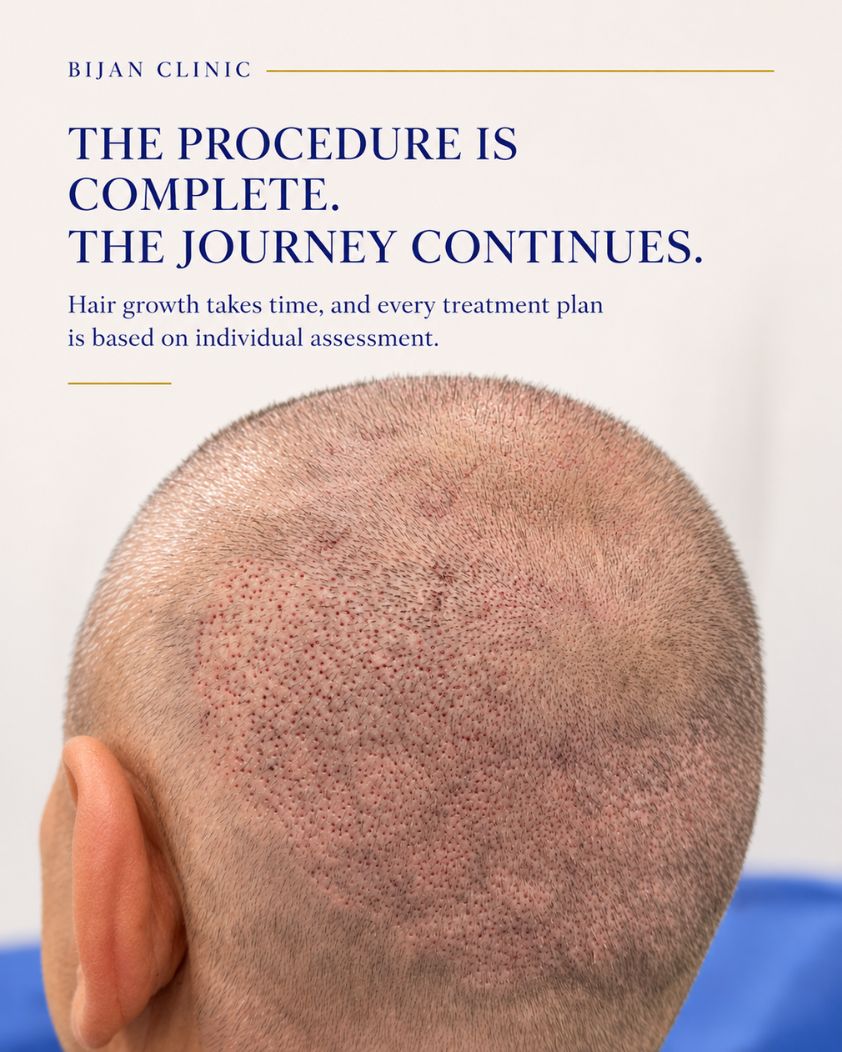
What Does the Donor Area Look Like Immediately After Extraction?
After FUE extraction, small extraction sites are visible across the treated donor region.
Temporary redness, sensitivity or small crusts may occur during early healing. The immediate postoperative appearance should not be confused with the healed donor area.
Extraction needs to be distributed according to the individual donor assessment. Removing too many follicles from a limited area may leave visible thinning or an uneven appearance.
What These Photographs Do Not Show
This case documents treatment planning and the immediate postoperative stage.
The photographs do not show:
- Established hair growth
- Final density
- The healed donor area
- Long-term changes in existing hair
- The patient’s final result
Hair growth develops gradually. The timing, density and appearance of the result vary according to the patient’s hair characteristics, treatment plan, healing and other individual factors.
You can view documented cases at different stages on our FUE hair transplant results page.
Risks and Limitations
Hair transplantation is a medical procedure and is not suitable for every patient.
Possible risks and limitations may include:
- Bleeding or infection
- Swelling, redness or discomfort
- Temporary numbness or altered sensation
- Scarring
- Temporary shedding of transplanted or existing hair
- Uneven growth
- Poor or incomplete graft survival
- Visible thinning in the donor area if extraction is excessive
- Continued loss of non-transplanted hair
- A result that differs from the patient’s expectations
- The possible need for additional treatment
An individual assessment is required to discuss suitability, treatment limitations and the risks relevant to a particular patient.
Why Hair Transplant Planning Matters
The visible procedure takes place on the treatment day, but many of the most important decisions are made before extraction begins.
Effective hair transplant planning needs to connect:
- The patient’s current hair-loss pattern
- The areas they would like to address
- The condition and capacity of the donor area
- Hairline design and facial proportions
- Graft distribution
- Possible future hair loss
- Realistic expectations about coverage and density
A higher graft number does not automatically mean a better or more appropriate result. The proposed plan needs to be suitable for the individual patient and their available donor supply.
Learn more about the FUE hair transplant procedure in Sydney or review the clinic’s hair transplant pricing information.
Book a Hair Transplant Consultation in Sydney
A consultation can help assess your hair-loss pattern, donor area and treatment priorities before a procedure is planned.
Book a ConsultationIndividual suitability, healing, graft survival, hair growth, density and results vary between patients.