
Hair Transplant Donor Area: What It Means and Why It Matters

The donor area is the part of the scalp where hair follicles are taken from for a hair transplant. In most scalp hair transplants, donor follicles are usually taken from suitable areas at the back and sides of the head and transplanted into areas affected by thinning or hair loss.
The donor area represents a limited supply of hair. Careful planning should consider both the grafts needed now and how the remaining donor supply may need to be managed over time.
Where Does Donor Hair Usually Come From?
For most hair transplant procedures, donor hair is taken from suitable areas of the scalp where the hair is expected to be more resistant to the pattern of hair loss affecting the top of the scalp.
The exact donor zone can differ from person to person.
During assessment, factors such as hair density, hair calibre, distribution and the extent of existing hair loss can help determine which areas may be appropriate for harvesting.
Why Is the Donor Area So Important?
A hair transplant redistributes existing follicles. It does not create new hair follicles.
This means the available donor supply needs to be used carefully. A treatment plan should consider:
- how much donor hair is available
- the size of the area being treated
- how many grafts may be appropriate
- whether future hair loss may require additional treatment
- how extraction may affect the appearance of the donor area
- the patient’s existing hair characteristics
Two people with a similar amount of hair loss may require very different treatment plans.
Does Donor Hair Grow Back After FUE?
The individual follicular units removed during FUE do not grow back in the exact extraction sites.
However, the surrounding hair remains in place, and when extraction is appropriately distributed, the donor area can continue to look natural as it heals.
Removing too many follicles from a small area can make the donor zone look visibly thin. The goal is not simply to harvest as many grafts as possible, but to use the donor supply in a way that supports both the recipient area and the long-term appearance of the donor region.
Can the Donor Area Be Overharvested?
Yes. Overharvesting can occur if too many grafts are removed from a limited area or if extractions are poorly distributed.
This can leave parts of the donor region looking visibly thin or uneven.
The risk of overharvesting is one reason the donor area should be assessed before a graft number is recommended. A graft target should be based on the individual donor supply and treatment goals rather than aiming for the highest possible number.
What Happens to the Donor Area After FUE?
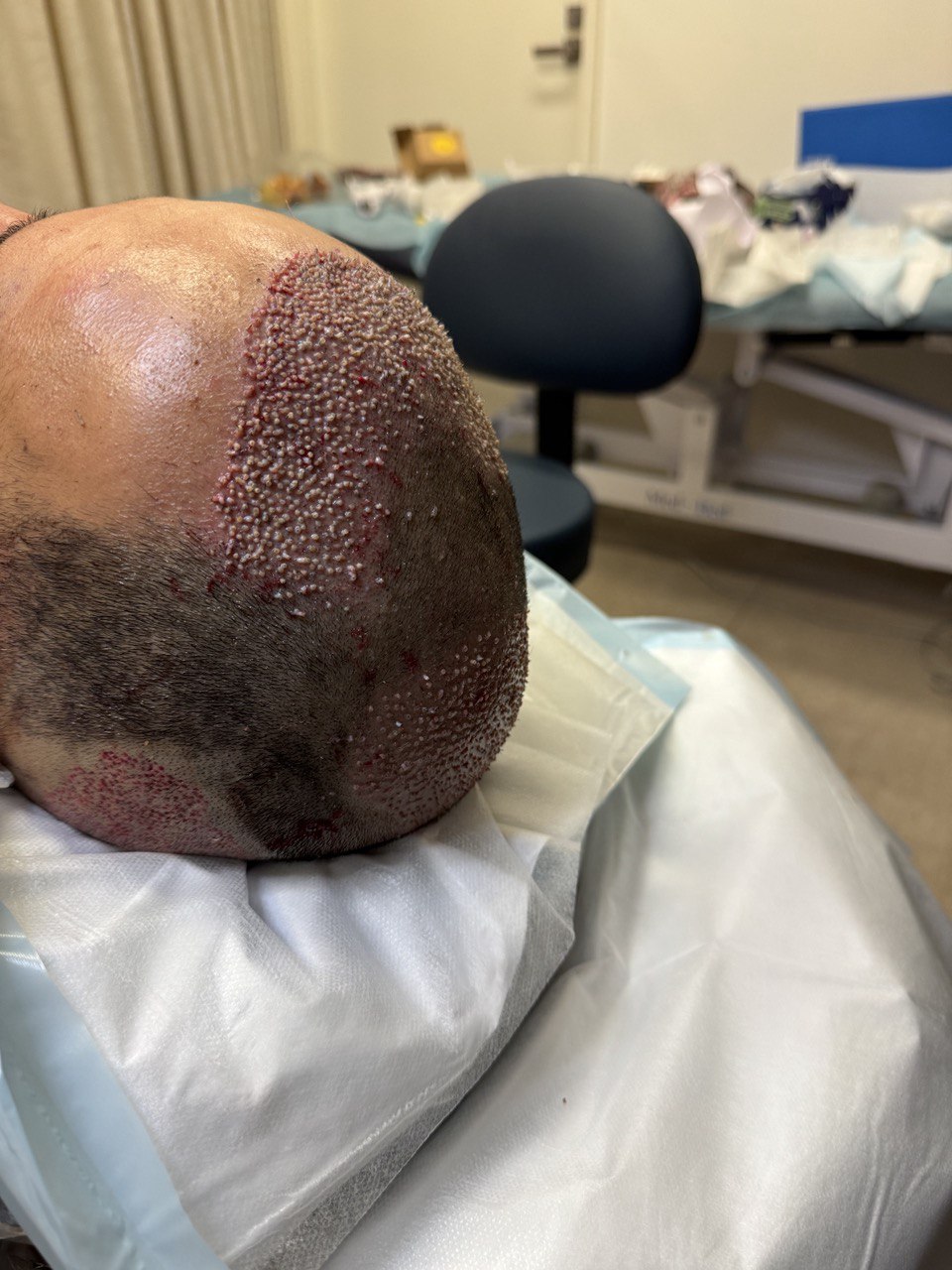
After FUE, small extraction sites are left where individual follicular units have been removed. These areas begin healing after the procedure.
Some temporary redness, sensitivity or small crusts can occur during the early recovery period.
The visible healing process varies from person to person and can depend on factors such as skin type, the number of grafts removed and the size of the treatment.
The donor area should be cared for according to the post-procedure instructions provided by the clinic.
How Is the Donor Area Assessed?
A donor-area assessment may consider the following factors:
Hair Density
The amount and distribution of available hair within the potential donor zone.
Hair Characteristics
Hair shaft thickness, colour, texture and contrast with the scalp.
Follicle Distribution
How follicular units are distributed across suitable harvesting areas.
Previous Treatment
Any previous surgery, extraction pattern, visible thinning or scarring.
Hair-Loss Pattern
The extent of current hair loss and the possibility of future progression.
Recipient Area
The size and priority of the areas the patient would like to improve.
The aim is to estimate how much donor hair may be available while maintaining a natural-looking donor area. At Bijan Clinic, treatment planning is based on an individual assessment rather than using the same graft target for every patient.
Does Hair Type Affect the Donor Area?
Yes. Hair characteristics can affect how much visual coverage a given number of grafts may provide.
For example, thicker or curlier hair may create a different appearance of coverage compared with very fine, straight hair. Hair-to-scalp colour contrast can also affect how dense an area appears.
This is why graft numbers should not be considered in isolation.
Donor Area and Long-Term Hair Transplant Planning
Long-term planning is especially important because hair loss may continue after a transplant.
The transplanted follicles may remain while surrounding non-transplanted hair continues to thin. If additional treatment is considered later, the donor supply will still be limited to the follicles that remain available.
For this reason, donor management should form part of the overall hair restoration plan from the beginning.
Donor Selection for Beard and Eyebrow Transplants
Donor Area for Beard Transplant
In beard transplantation, donor follicles are commonly selected from suitable scalp hair. The choice of donor hair depends on how well its characteristics match the area being treated and how many grafts are required.
Direction, calibre and planned distribution are particularly important when treating the beard or moustache area.
Learn about Beard Transplant Sydney →Donor Area for Eyebrow Transplant
Eyebrow transplantation also requires careful donor selection. The donor hair needs to be chosen with the final eyebrow design in mind, including hair calibre, direction and positioning.
The appropriate donor area should be determined through individual treatment planning.
Learn about Eyebrow Transplant Sydney →Can Body Hair Be Used as Donor Hair?
In selected cases, non-scalp hair may sometimes be considered when scalp donor supply is limited.
However, body hair can differ from scalp hair in growth cycle, calibre, texture and length. It is therefore not automatically interchangeable with scalp donor hair.
Whether it is appropriate depends on the individual case and treatment goals.
What If the Donor Area Is Weak?
A limited donor area can affect what can realistically be achieved with transplantation. In some cases, it may mean:
- fewer grafts are appropriate
- the treatment area needs to be prioritised
- the hairline design should be more conservative
- a staged approach may be considered
- hair transplantation may not be the most suitable option
A consultation helps determine whether the donor supply is sufficient for the intended treatment.
Frequently Asked Questions
What is the donor area in a hair transplant?
Does donor hair grow back after extraction?
Can you run out of donor hair?
Can too many grafts be taken from the donor area?
How long does the donor area take to heal?
Can someone with a weak donor area still have a hair transplant?
Donor Area Assessment at Bijan Clinic
If you are considering a hair transplant, assessing the donor area is an important part of deciding what may be achievable.
At Bijan Clinic in Auburn, Sydney, treatment planning takes into account the pattern of hair loss, donor supply and the areas you would like to improve before a graft estimate or treatment recommendation is made.